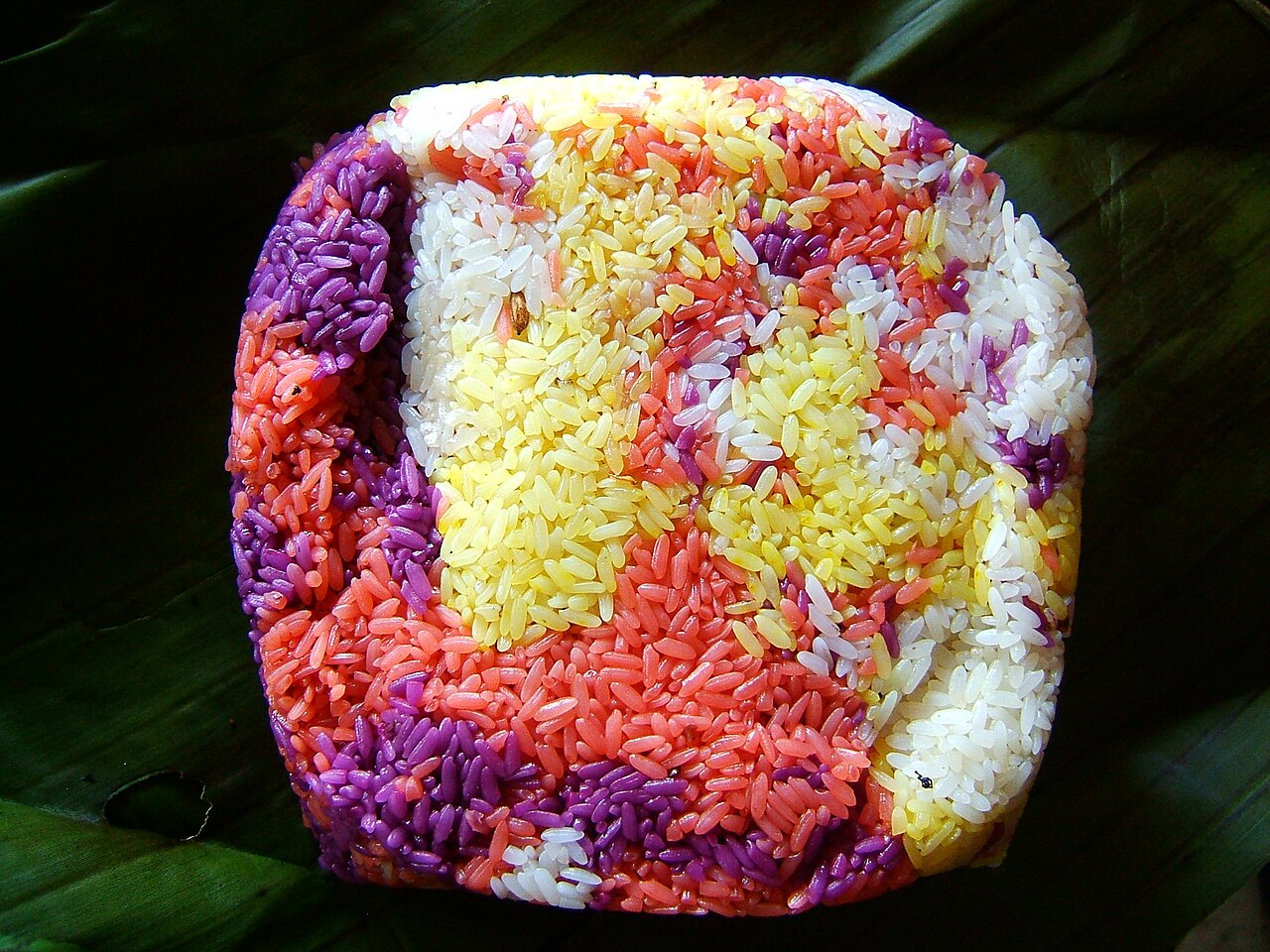
Lift the lid off a woven bamboo steamer and layers of red, black, yellow, white, and purple sticky rice rise in steam -- an indispensable dish on Tày and Nùng tables for weddings, funerals, and ritual festivals alike. Behind each color lies a specific dye plant and a meaning passed down through generations of folk tradition.
Cross-confirmed by government bodies and state media as a traditional Tày-Nùng rice dish
Cao Bằng's official provincial party newspaper, the provincial government's e-portal, and Nhân Dân (the Vietnamese Communist Party's central newspaper) cross-confirm that five-color sticky rice is a traditional Tày-Nùng dish symbolizing ethnic unity, found at markets and festivals across every ward and commune in Cao Bằng province, with no dispute limiting its origin to a single district. The Cao Bằng version comes with specific supporting evidence for its dye plants and rice variety: red is dyed with chắm ché leaves, black with sâu sâu leaves, yellow with the spring petals of Bjoóc phón, and the sticky rice itself is the local Pì Pất variety. It's directly tied to folk rituals around birth and funerals, part of the Tày and Nùng people's everyday life and belief system, not simply festive plating.
Honest clarification: a "homeland vs. tourism-introduced" contrast with the same-named dish in this guide's Sa Pa entry
It has to be said honestly that this guide's Sa Pa city entry already includes a dish of the same name, "Xôi ngũ sắc" -- that entry's own note already acknowledges it "isn't a Sa Pa original or H'Mông tradition; it's a Tày rice dish introduced to the tourist market to meet visitor demand." Cao Bằng, by contrast, is the true ancestral homeland where the Tày and Nùng people have lived for generations, and the version documented here comes with specific dye plants, rice variety, and folk-ritual evidence that differ from Sa Pa's -- it belongs to the local, original context, not a version transplanted in for the tourist market. In short: what's eaten in Sa Pa is "a Tày rice dish introduced into the northwestern highland tourist market to meet visitor demand," while what's eaten in Cao Bằng is "the everyday food custom of the Tày and Nùng homeland in the northeastern borderlands." The colors and plant species used may not fully match between the two places either -- this entry doesn't force them into a single unified recipe.
How to Eat It Like a Local
- Markets and festivals across every ward and commune in Cao Bằng province are the easiest place to find a freshly steamed version.
- The traditional way to eat it mixes in sesame salt and crushed peanuts, for added aroma.
- Encountering it at a Tày or Nùng wedding, funeral, or celebration is the most direct way to understand local folk custom.
An Honest Look at This Rice Dish's Origins
- This guide's Sa Pa city entry already includes a dish of the same name, which itself acknowledges being a version introduced later for the tourist market, not H'Mông tradition.
- Cao Bằng is the true ancestral homeland of the Tày and Nùng people, and the version documented here comes with specific evidence for its dye plants and rice variety.
- The dye plants and rice varieties used in the two places may not match -- this entry doesn't force them into a single unified recipe.
One bite of sticky rice carries five colors, and generations of Tày-Nùng care for plant dyes and rice varieties along with it -- what's in this bowl isn't plating meant for tourists, but a way of life that has never left the northeastern borderland homeland.