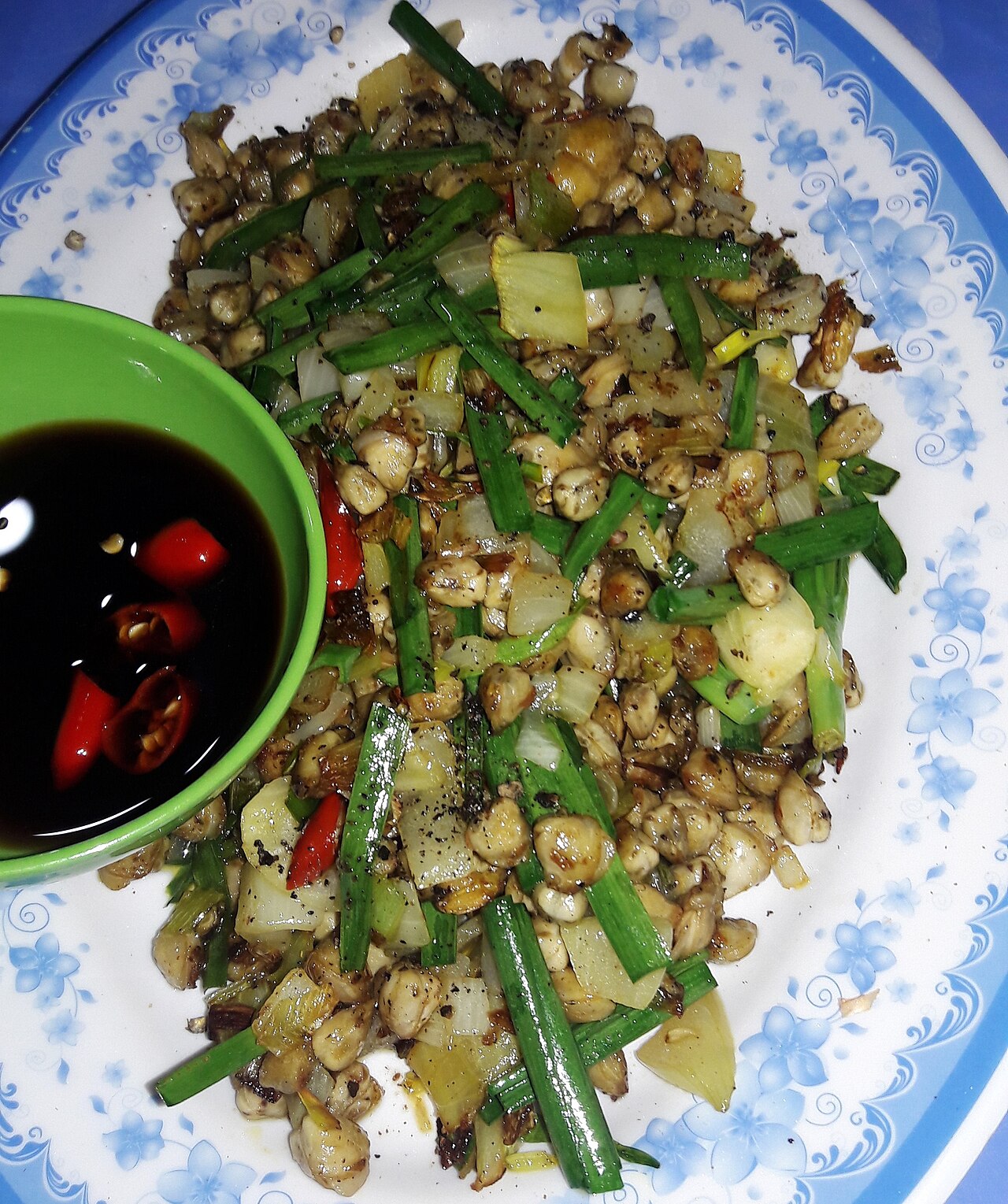
Cross Cẩm Nam Bridge and you'll reach the quieter south bank of Hoi An, home to the countryside food this area is known for. Bánh đập – hến xào is really two dishes served as one: a cracker made by pressing a grilled crisp rice-paper sheet together with a soft one — you're meant to crack the sheets apart before eating, which is where the name bánh đập ("smashed cracker") comes from — paired with baby clams from the Cẩm Nam sandbar on the Thu Bồn River, stir-fried and finished with fish sauce, scallion oil, and chili. One dry, one wet; one crisp, one fresh — eaten together for contrast.
Baby clams from the Cẩm Nam sandbar
Multiple Vietnamese travel outlets, including Bazan Travel, LuHanhVietNam, and Mia.vn, cross-report that the Cẩm Nam clam sandbar (Hến Cẩm Nam) along the Thu Bồn River is a distinctive source of these tiny clams, and local travel media also describe this dish as one of Hoi An's representative countryside snacks.
Honest clarification: local consensus, not an official origin certification
It's worth being clear: these sources are all travel and lifestyle media cross-reporting the same claim, not certification from an official body. The claim that the clams come only from the Cẩm Nam sandbar reflects local consensus rather than any scientific survey or official designation of origin, and the strength of the evidence is moderate at best. That doesn't mean this dish isn't worth eating — it's just a reminder to take claims like "only found here" with a grain of salt rather than treating them as hard fact.
How to Eat It
- Remember to crack the cracker apart with your hands before eating — it's both the source of the dish's name and part of how it's meant to be eaten.
- The stir-fried clams taste best hot; pairing them with the cracker adds even more texture.
- Several long-standing stalls operate around Cẩm Nam Bridge — no need to insist on finding a single "authentic" one.
Don't Treat Local Legend as Hard Fact
- The claim that baby clams come "only from the Cẩm Nam sandbar" comes from cross-reporting by travel and lifestyle media, not an official designation of origin.
- The strength of this evidence is moderate — treat it as local consensus worth knowing, not absolute fact.
- Deliciousness and exclusive sourcing are two different things — don't mythologize this dish for the latter.
A cracker you have to crack apart yourself is a reminder that this is a dish meant to be participated in, not just something that arrives ready-made at your table.