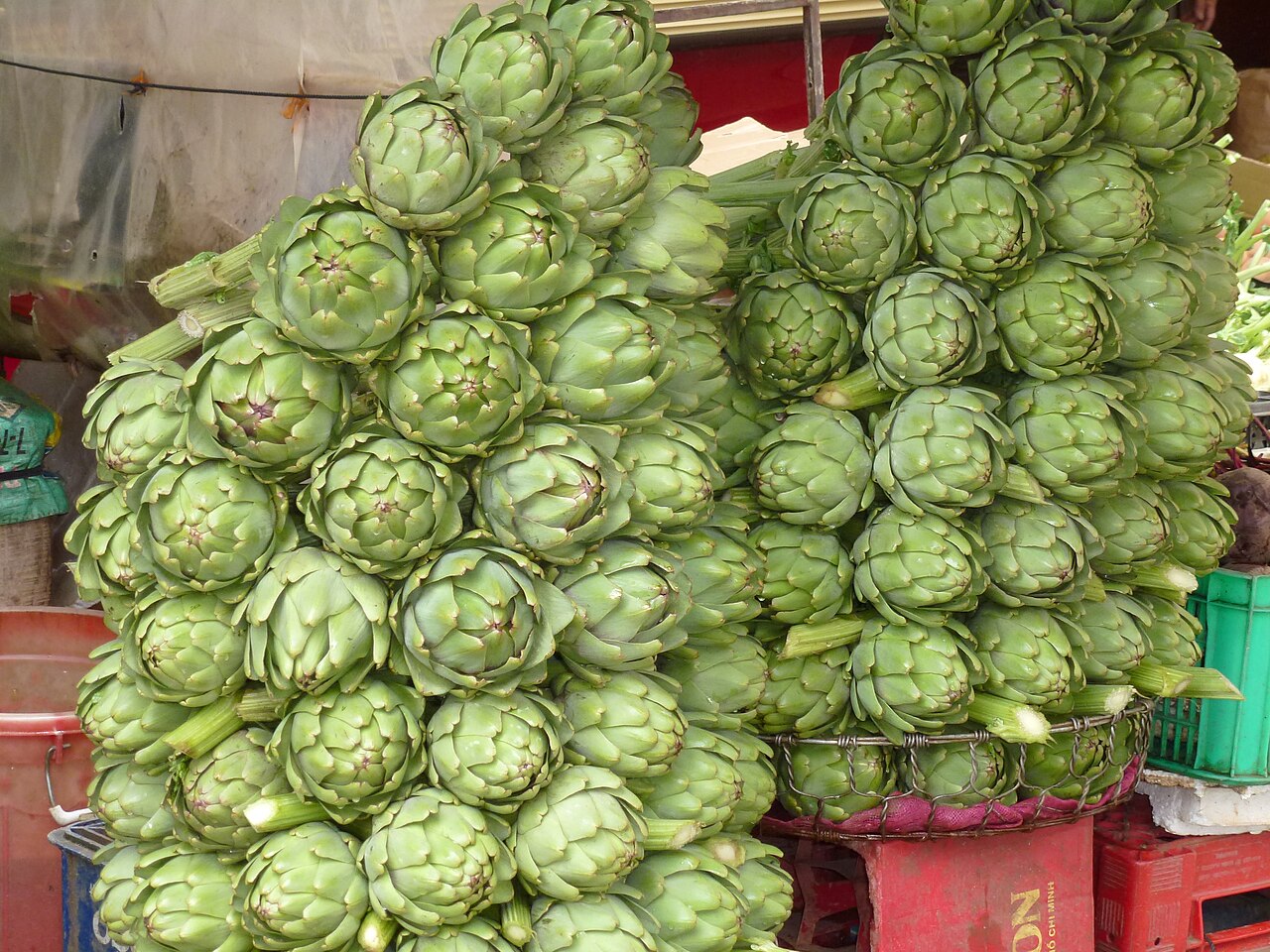
In the dried-goods and local-produce stalls at Đà Lạt Market, bags of dried artichoke flowers and jars of artichoke paste line the shelves — atiso Đà Lạt is one of this highland city's most representative French colonial agricultural legacies, the whole plant usable for tea, paste, or cooking, and a common souvenir visitors take home.
A 1940s French-introduced history documented by official media
The official outlet Tạp chí Công Thương (under the Ministry of Industry and Trade) once ran a dedicated feature, 'Atiso - Dược liệu 'vàng' trên đất Lâm Đồng,' recording that the French introduced artichoke to Vietnam around the 1940s, developing it into a specialty under Đà Lạt's climate and soil. Multiple independent produce vendors and travel outlets also cross-confirm Đà Lạt as the largest artichoke-growing region in all of Vietnam. Artichoke (Atisô, transliterated from the French Artichaut) was introduced by French colonists — a classic case of a French colonial agricultural legacy transformed into a local specialty.
Honest clarification: a souvenir item, not a ready-to-eat street snack
Worth noting honestly: the whole artichoke plant can be made into tea, paste, or cooked (in soups), a common item in Đà Lạt's souvenir market rather than a ready-to-eat street snack — so this guide classifies it as a collector item rather than a street must-try. The market occasionally sees inferior raw materials mixed in; it's worth choosing a reputable produce brand when buying, to avoid inconsistent quality.
How to Buy It Well
- Choose a reputable produce brand when buying, to avoid inferior raw materials being mixed in.
- Artichoke tea, paste, and dried goods are all common souvenir forms — choose based on ease of carrying.
- The local-produce stalls at Đà Lạt Market cluster together, worth comparing price and quality across several before buying.
An Honest Look at This Produce's Standing
- In essence, a French colonial agricultural legacy transformed into a local specialty, not a traditional Vietnamese dish.
- A souvenir item rather than a ready-to-eat street snack — this guide classifies it as collector tier accordingly.
- The market occasionally sees inferior raw materials mixed in — pay attention to brand reputation when buying.
A bag of artichoke tea brings home an agricultural legacy left by French colonists nearly a century ago. This plant, introduced in the 1940s, is now one of the most representative souvenirs at Đà Lạt Market's local-produce stalls — check the brand carefully, and this highland specialty will feel worth buying.