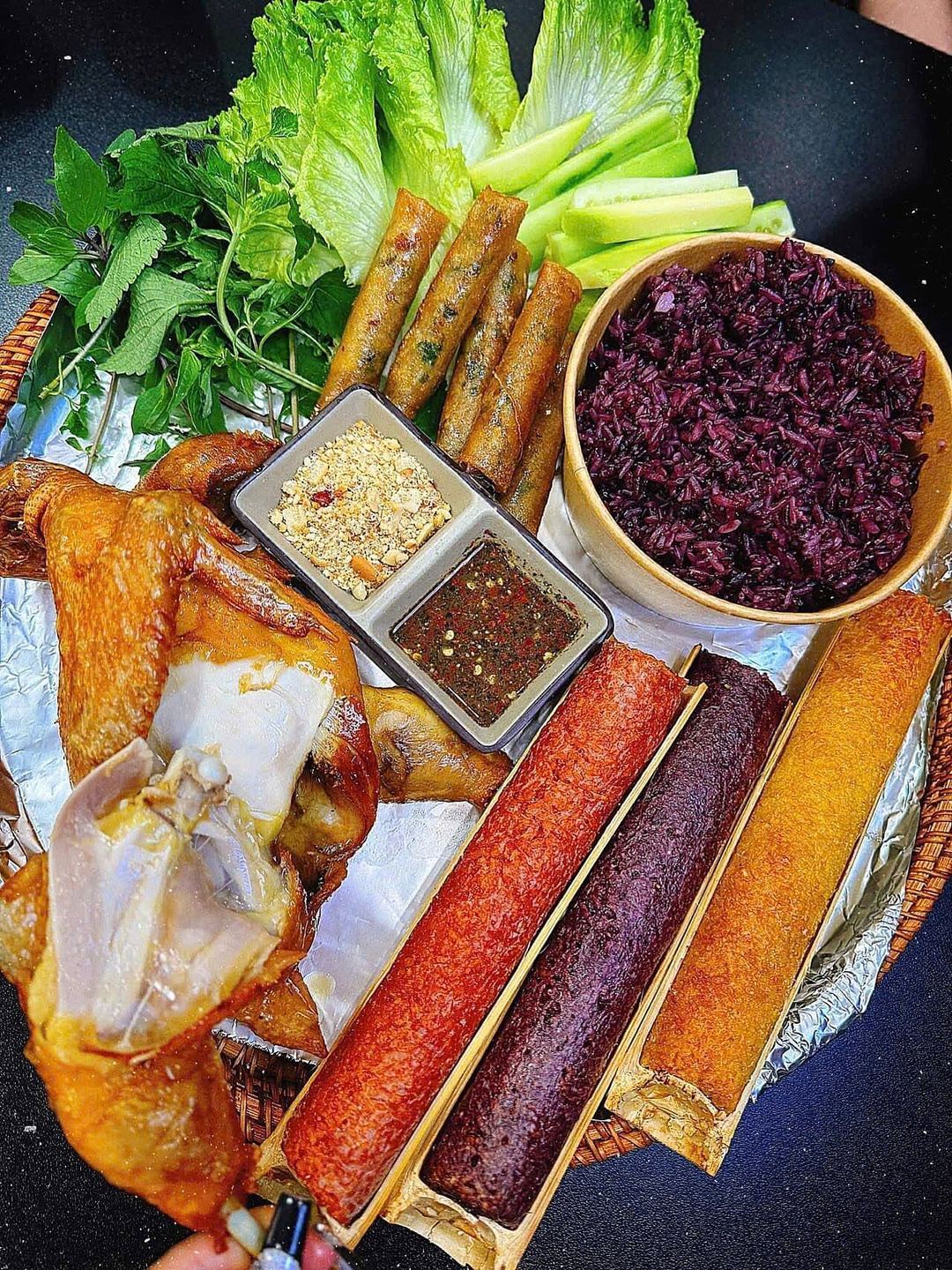
At Sa Pa's night market stalls, stacks of trimmed bamboo tubes wait to be split open, revealing sticky rice roasted until fragrant, carrying the bamboo's own faint aroma. This rice dish, which looks like a Sa Pa exclusive, is actually a traditional recipe shared across several ethnic communities throughout the northwest highlands.
The Vietnamese Wikipedia records a tradition shared across multiple communities, and independent travel outlets cross-confirm it's widely sold in Sa Pa's night market
The Vietnamese Wikipedia entry "Cơm lam" records this as a traditional rice dish shared by the Thái, Mường, Tày, and H'Mông communities across the northwest. Independent travel outlets mia.vn ("Cơm lam - Món ăn thể hiện tinh túy của ẩm thực Sapa") and paoquan.vn cross-confirm it's widely sold at Sa Pa's night market and city-center stalls.
Honest clarification: bamboo tube rice isn't unique to Sa Pa — it's a traditional dish shared across multiple northwest communities
It has to be said honestly that bamboo tube rice isn't unique to Sa Pa — Wikipedia explicitly records it as a traditional rice dish shared across multiple northwest ethnic groups (the Thái call it "khẩu lam," the Mường "kháu lam," with "lam" meaning "to roast" in the Thái language), and the Tày and H'Mông communities have equivalent traditions of their own. Sa Pa's market version commonly adds five-color sticky rice (cơm lam ngũ sắc) as a touristy twist — this entry honestly notes it as a product of shared traditions across communities, not a single group's original invention.
How to Eat It Like a Local
- Widely sold at the night market and city-center stalls — pick a tube fresh off the fire and eat it while it's still hot.
- The five-color sticky rice version is a common touristy twist worth comparing against the plain white-rice original.
- The bamboo skin is trimmed thin for easy splitting — it's fine to ask a vendor to help open it.
An Honest Look at This Dish's Origins
- Bamboo tube rice isn't unique to Sa Pa — it's a traditional rice dish shared across the Thái, Mường, Tày, and H'Mông communities of the northwest.
- "Lam" means "to roast" in the Thái language, and each community has its own name and method.
- Sa Pa's five-color sticky rice version is a touristy twist, not a Sa Pa original or a native H'Mông tradition.
Split open a bamboo tube roasted until fragrant, and what's inside isn't some secret recipe unique to Sa Pa, but a shared wisdom passed down across generations of Thái, Mường, Tày, and other communities throughout the northwest. Sa Pa added five-color sticky rice to win over tourists, but this age-old method never belonged to any single community to begin with.