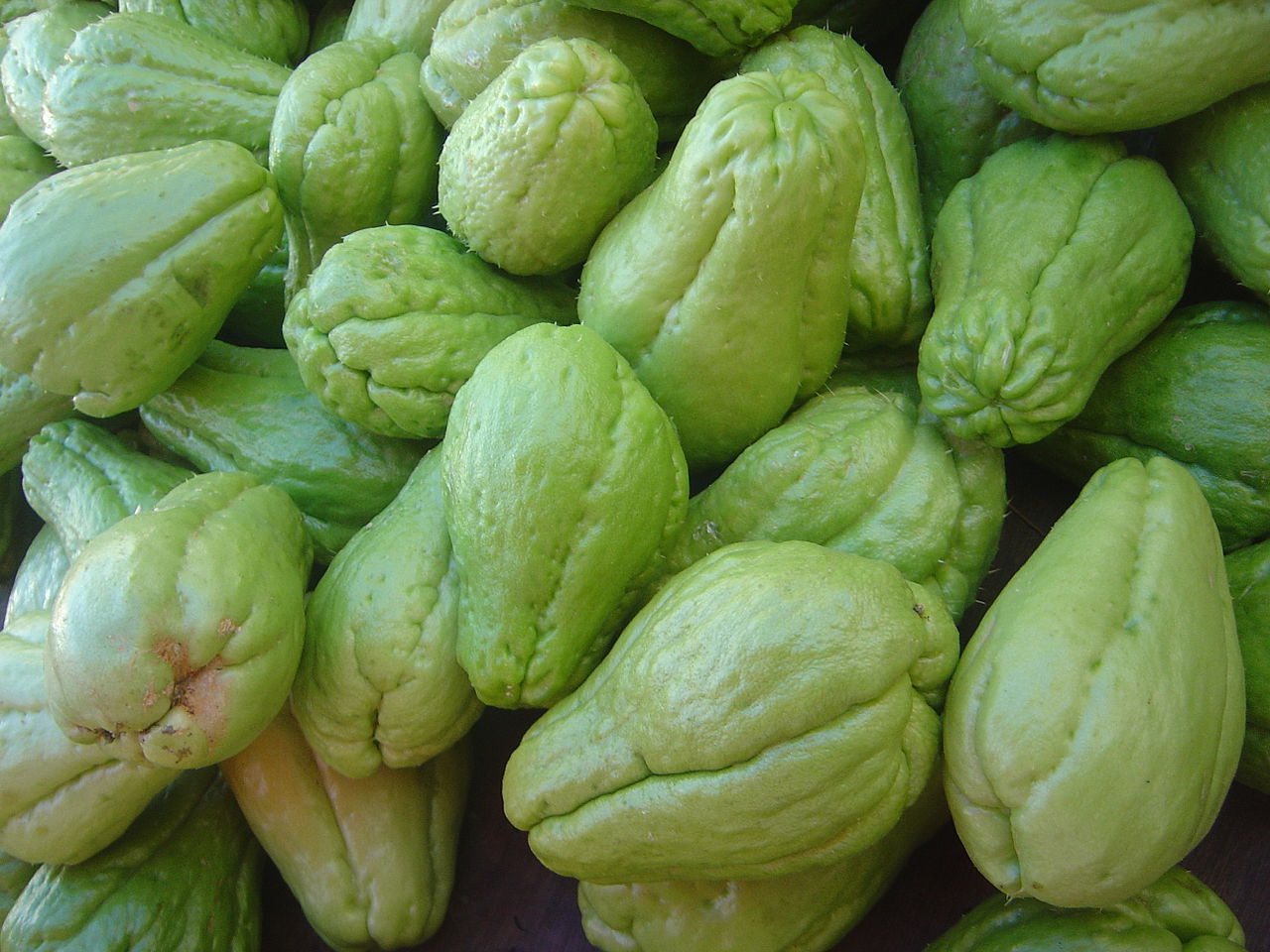
Across more than 150 hectares of terraced contract farmland worked by the Hoa Đào cooperative in Phường Ô Quý Hồ, chayote vines climb their trellises, and workers carefully pinch off the tender green shoot tips. This "leave-the-roots, multi-year" growing method, made possible by the high-altitude climate, lets a single planting of Sa Pa chayote be harvested continuously for up to 10 years without replanting.
Lào Cai's official traceability platform records the scale, cross-confirmed by provincial state media and independent local outlets on cooperative acreage
The Lào Cai Provincial People's Committee's official agricultural traceability platform truyxuatnongsan.laocai.gov.vn carries an entry for "Su su Sa Pa," and state outlet baolaocai.vn ("Su su - đặc sản của vùng đất mờ sương") along with independent local outlet sapa24h.com ("Sa Pa phát triển bền vững vùng trồng Su Su hàng hóa") report that the Hoa Đào cooperative in Phường Ô Quý Hồ farms over 150 contract hectares. Sa Pa chayote is grown by a "leave-the-roots, multi-year" method — one planting yields continuous harvests for up to 10 years without replanting, a special technique made possible by the high-altitude cold climate, unlike other growing regions that must replant annually. The tender shoots (ngọn su su) are a common stir-fry ingredient, picked from the second node at the tip of the vine.
Honest clarification: chayote isn't a native Vietnamese plant — it was introduced to Vietnam's highlands during the French colonial period
It has to be said honestly that chayote is not a native Vietnamese plant — it originates in Mexico and Central America, and was introduced for cultivation in Vietnam's highlands during the French colonial period. Sa Pa is only one of its well-known growing regions in Vietnam, not the plant's native home or sole growing area — this entry honestly frames it as a successful case of a foreign plant adapted to local farming, not a homegrown Sa Pa vegetable.
How to Eat It Like a Local
- The shoots stir-fry up crisp and refreshing, a common quick side dish at Sa Pa restaurants.
- The Hoa Đào cooperative's farmland in Phường Ô Quý Hồ sits about 12–15 kilometers from the city center, along National Route 4D toward Lai Châu.
- The leave-the-roots, multi-year method keeps Sa Pa chayote's quality consistent, with fresh shoots available across different seasons.
An Honest Look at This Vine's Origins
- Chayote is not a native Vietnamese plant — it originates in Mexico and Central America.
- It was introduced to Vietnam's highlands during the French colonial period, only then taking root in Sa Pa.
- Sa Pa is just one of Vietnam's well-known growing regions, not the plant's native home or exclusive source.
A plate of crisp chayote shoots arrives at the table, the product of Sa Pa's high-altitude leave-the-roots technique — but honestly, this plant's bloodline runs back to Mexico and Central America. French colonists carried it up onto Vietnam's highlands, and Sa Pa growers turned it into a signature side dish of their own.