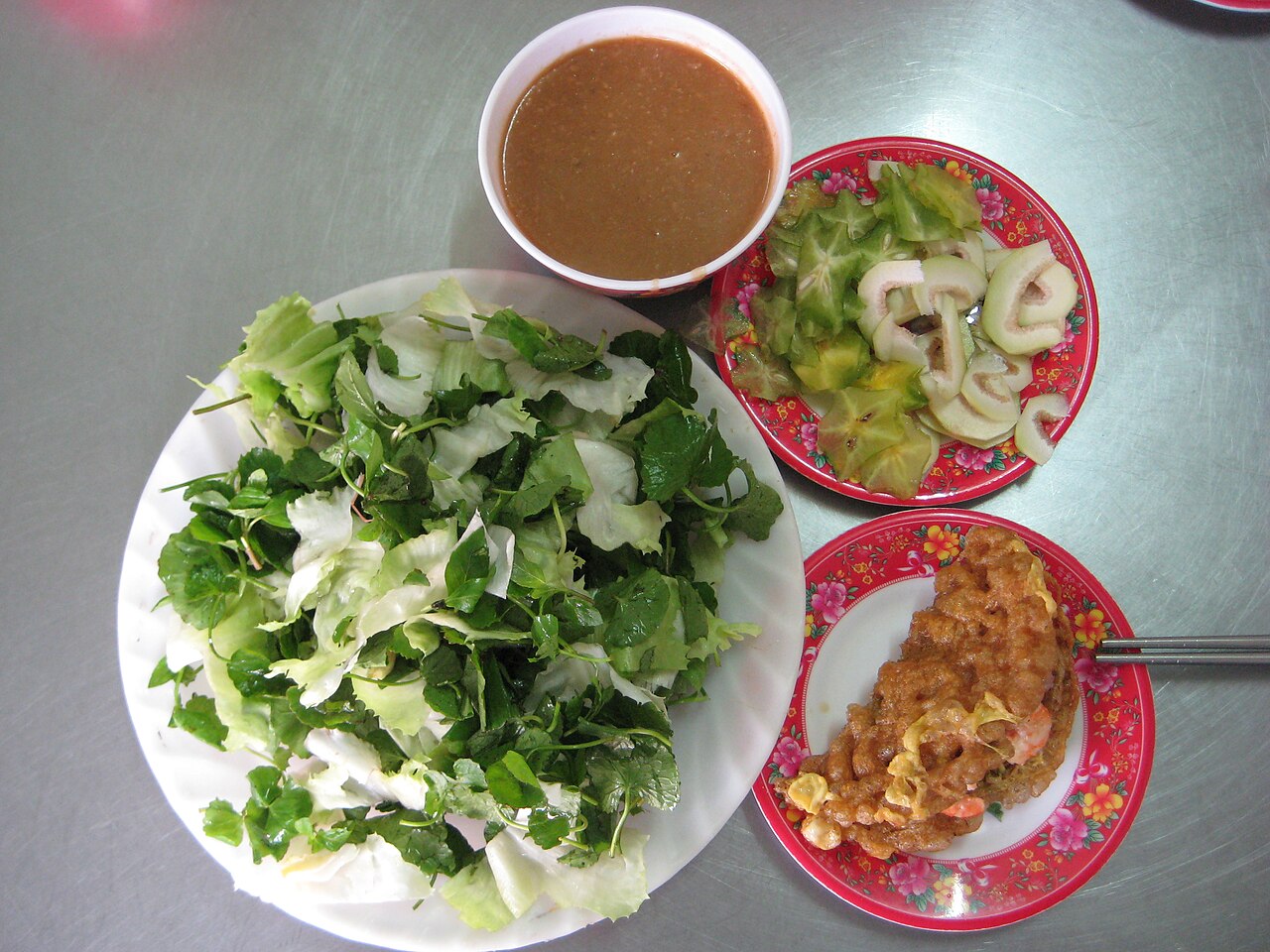
Đinh Tiên Hoàng Street runs right alongside the old citadel's Cửa Thượng Tứ (Upper Four Gate), where a row of small stalls set up flat iron pans over open flame. Rice batter sizzles the moment it's ladled down, followed by shrimp, sliced pork, and bean sprouts layered on top as the pancake fries to golden crispness and gets folded in half. Hue's version of bánh khoái is on the small side - one person might need two or three to feel satisfied - wrapped whole in lettuce and herbs, then dipped into a thick pork liver-peanut sauce for a bite that delivers crunch, sweetness, and nutty richness all at once.
One Pancake, Two Different Origins
Vietnam's national tourism board prominently features bánh khoái on its 'must-eat in Hue' page, and the cluster of old shops near Cửa Thượng Tứ has been covered repeatedly by local and travel outlets like Thanh Niên and Dân Trí. Lạc Thiện, at No. 6 Đinh Tiên Hoàng Street, has been open since the 1970s - more than 40 years - and is the shop most visitors come to know first. The founding family, spanning three generations, are all congenitally deaf, famous for taking orders entirely through hand gestures, a story angle the media loves to cover. But that's a separate matter from the quality of the pancake itself - several other old shops nearby, like Lạc Thanh and Hồng Mai, are of comparable standard, so this is far from the only one worth trying.
Don't Confuse It with Southern Bánh Xèo
Hue's bánh khoái looks similar to the southern bánh xèo and is often mistaken for the same dish by out-of-town visitors, but the two actually belong to different regional lineages - central and southern Vietnam. The Hue version is smaller with a thicker crust, and it's served with a thick pork liver-peanut sauce rather than the plain fish sauce dip typical in the south. Understanding this difference keeps you from lumping the signature street foods of two different cities together.
Choosing a Shop Near Cửa Thượng Tứ
- Lạc Thiện has been running for more than 40 years and is the best-known shop among visitors, but nearby old shops are of similar quality - no need to fixate on just one.
- The smaller size is normal - ordering a few per person is more satisfying and better value.
- To order in Vietnamese, try 'Cho tôi hai cái bánh khoái' (two bánh khoái, please).
Two Things Not to Mix Up
- Hue's bánh khoái and southern bánh xèo look similar but differ in dipping sauce and crust thickness - two distinct regional lineages.
- The deaf family's sign-language ordering is a media-friendly story angle, separate from how good the pancake actually tastes.
- For authentic flavor, stick to the cluster of old shops near Cửa Thượng Tứ rather than fixating on a single name.
A seemingly humble pancake, fried up, turns out to trace two distinct characters running through central and southern Vietnamese cuisine.