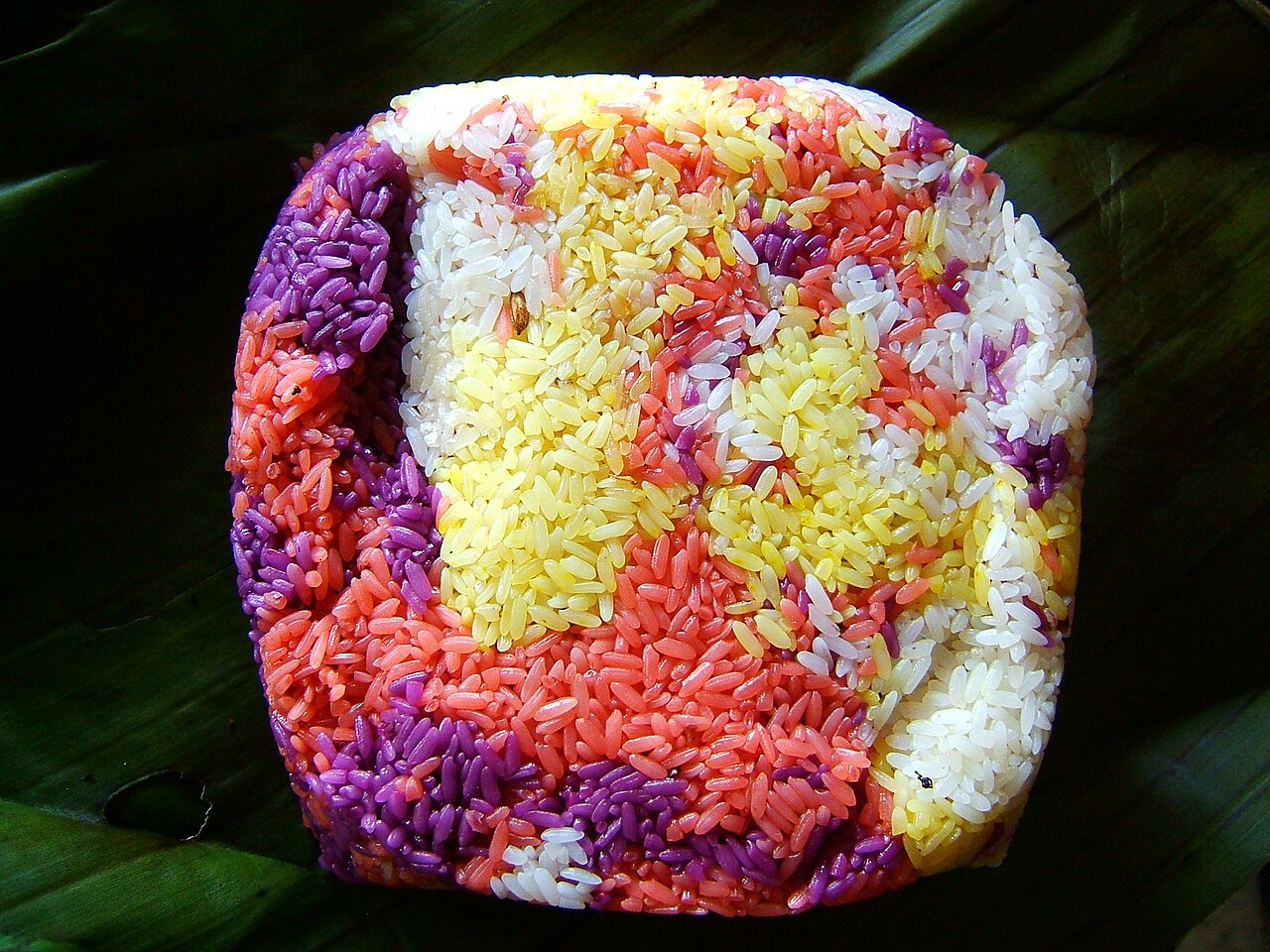
At a Sa Pa night market stall, a plate of five-color sticky rice sits in vivid layers — red, green, purple, white, and yellow, each distinct. This rice dish, often paired with thắng cố or grilled meat, actually carries another community's cultural tradition, not a H'Mông original.
A government portal and state media record the tradition's ethnic origin, and mainstream media cross-confirm it as a Tày tradition
Vietnam's government portal baochinhphu.vn (Cổng Thông tin điện tử Chính phủ) ran a feature, "Xôi ngũ sắc - Văn hóa ẩm thực đặc trưng của vùng núi Tây Bắc," explicitly listing Sa Pa among the dish's well-known sources. State media Tạp chí Công Thương ran "Xôi ngũ sắc – Nét văn hoá của người vùng cao," and mainstream outlet VnExpress cross-confirms it as a Tày tradition in "Xôi ngũ sắc của người Tày," with the five colors — red, green, purple, white, yellow — representing the five elements.
Honest clarification: five-color sticky rice is a Tày tradition, not a native H'Mông dish, and its sale in Sa Pa reflects tourism-driven cultural mixing
It has to be said honestly that five-color sticky rice is a traditional rice dish of the Tày people, not a native H'Mông dish — VnExpress and other mainstream media explicitly record its ethnic origin as Tày. Its common presence at Sa Pa's markets reflects tourist demand and cultural mixing among the region's many communities, rather than a Sa Pa original or H'Mông tradition — this entry honestly notes the dish's true ethnic context.
How to Eat It Like a Local
- Commonly sold at the night market, often paired with thắng cố or grilled meat.
- The five colors each represent an element — ask the vendor about the natural dyes used for each one.
- Best eaten warm, when the sticky rice's texture pairs best with the aroma of the coloring ingredients.
An Honest Look at This Dish's Ethnic Roots
- Five-color sticky rice is a traditional Tày dish, not a native H'Mông tradition.
- Its sale at Sa Pa's markets reflects tourist demand and cultural mixing among the region's communities, not a Sa Pa original.
- This entry honestly notes the dish's true ethnic context, rather than misattributing it as a H'Mông tradition.
A plate of sticky rice, red, green, purple, white, and yellow in neat layers, arrives at the table, its colors carrying the Tày people's generations-old wisdom of the five elements. Sa Pa's night market brought it alongside thắng cố — a beautiful scene born of cultural mixing among communities, but not a family recipe that belongs to the H'Mông.