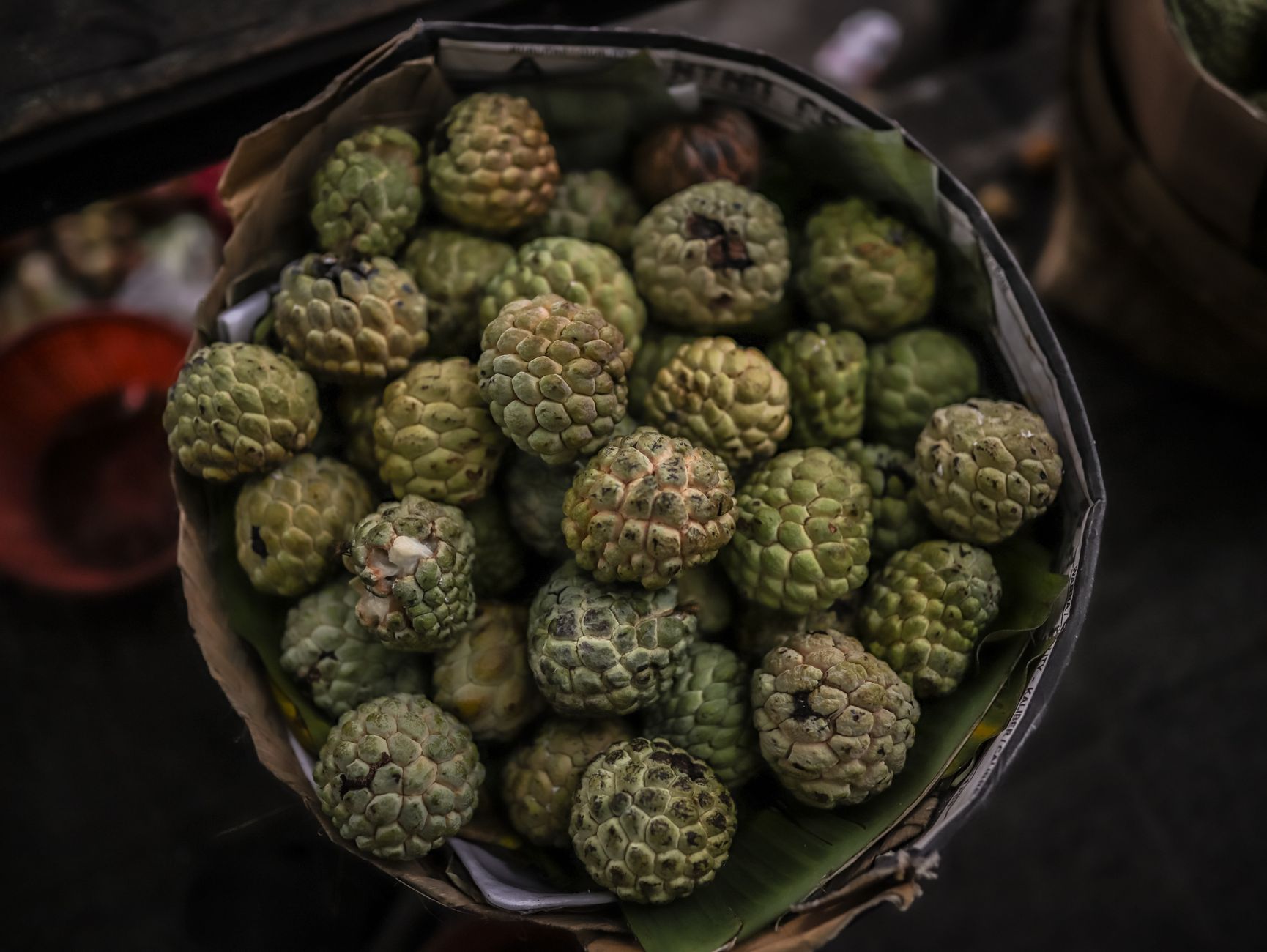
In the orchard, custard apples hang heavy on every branch, their skin covered in raised, scale-like ridges -- crack one open and the flesh inside is fine, tender, and sweetly fragrant. This is the most celebrated fruit at the foot of Bà Đen Mountain, and a representative Tây Ninh agricultural product formally certified with a geographical indication by Vietnam's National Office of Intellectual Property.
An official geographical indication, cross-confirmed by state media and the provincial agriculture department as Tây Ninh's representative fruit
Vietnam's National Office of Intellectual Property approved the 'Mãng cầu Bà Đen - Tây Ninh' geographical indication. State media outlet VietnamPlus, Tây Ninh's provincial party newspaper, and the Tây Ninh Department of Agriculture's official website cross-confirm this: thanks to the distinctive soil and climate conditions of the Bà Đen Mountain area, this custard apple has fine, sweetly fragrant flesh with few seeds and plenty of flesh -- it's the most nationally recognized Tây Ninh fruit in Vietnam, widely sold at city fruit markets and souvenir shops.
Honest clarification: only half of the 8 approved wards/communes fall within Tây Ninh City's own territory
It has to be said honestly that the approved growing zone under the geographical indication covers 8 wards/communes in total. Of these, Thạnh Tân, Tân Bình, Ninh Thạnh, and Ninh Sơn fall directly under Tây Ninh City's own territory, while the other four -- Suối Đá, Phan, and Bàu Năng under Dương Minh Châu district, and Tân Hưng under Tân Châu district -- do not fall within the city's own territory. This entry honestly discloses that not all 8 approved wards/communes sit within the city, though Tây Ninh City's own territory is genuinely one of the officially recognized core growing areas, not a fringe claim riding on the name -- orchards in Thạnh Tân, Tân Bình, and other wards within the city are indeed places visitors can actually visit.
How to Eat It Like a Local
- During harvest season, visit orchards in Thạnh Tân, Tân Bình, and other wards under Tây Ninh City for the freshest fruit.
- City fruit markets and souvenir shops sell it year-round, convenient for picking up along the way.
- When choosing, check whether the gaps between the scale-like ridges on the skin have started to split slightly -- usually a sign of ripeness.
An Honest Look at This Fruit's Origins
- Of the 8 approved wards/communes under the geographical indication, only 4 fall directly under Tây Ninh City's own territory -- the other 4 span neighboring districts.
- Tây Ninh City's own territory is genuinely one of the officially recognized core growing areas, not a fringe claim -- this entry honestly discloses that not the whole growing zone sits within the city.
- The fruit's quality comes from the overall soil and climate of the Bà Đen Mountain area, not an advantage exclusive to any single ward/commune.
Crack open a Bà Đen Mountain custard apple and let the fine, sweet flesh melt on the tongue -- half of that sweetness genuinely grew on land within Tây Ninh City's own territory, and the other half comes from the same climate and soil extending out from the foot of Bà Đen Mountain, across administrative lines.