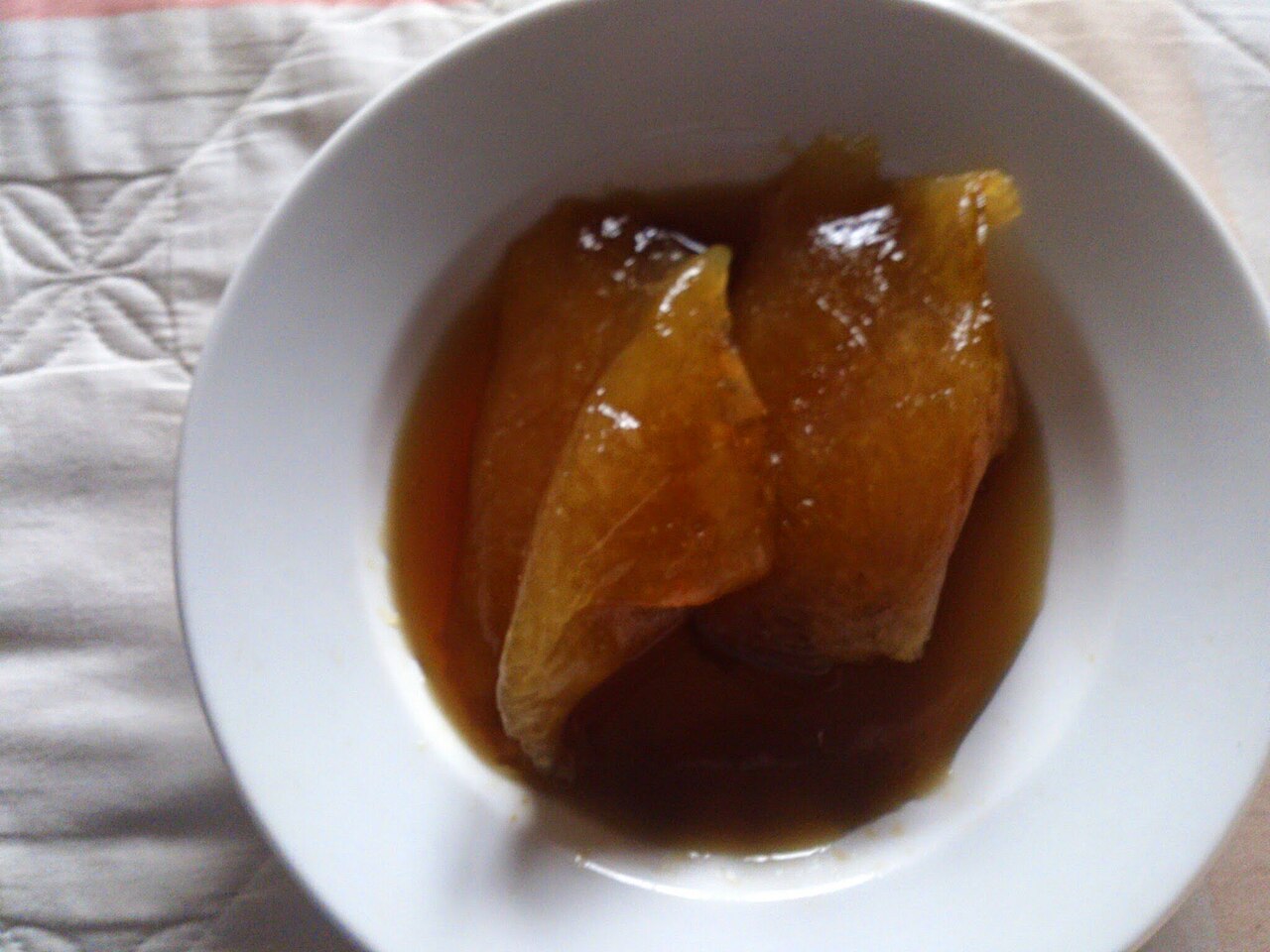
At a market stall ahead of the Tết Đoan Ngọ festival, unwrapped rice cakes show off a rare translucent amber color, glistening once cane-sugar syrup is drizzled on top -- this is a century-old craft carried on in Đình Tổ village, and its color and method differ from the ash-water rice cakes recorded elsewhere.
Cross-confirmed by the provincial government and VOV's Travel Television as a century-old craft village product
Bắc Ninh Province's government website (bacninh.gov.vn) and Voice of Vietnam's Travel Television (truyenhinhdulich.vn), an official/quasi-official pair, cross-confirm this dish. The method burns rice straw to ash, filters it for clear ash water, mixes it with lime water, and soaks sticky rice in the mixture before steaming it to a translucent amber, served with cane-sugar syrup. It's a century-old craft-village product for Tết Đoan Ngọ, with color and craftsmanship documented as different from ash-water rice cakes made elsewhere.
Honest clarification: the true origin is Đình Tổ village
It has to be said honestly that the true origin is Đình Tổ village, Thuận Thành town, not within Bắc Ninh City's own territory. This entry's anchor is placed instead at a representative festival-market and souvenir-shop location confirmed within the city, honestly disclosing this rather than overstating the dish as a Bắc Ninh City original. Đình Tổ village is also the origin of two other dishes in this entry set (fermented bean paste and sliced rice porridge), but this rice cake's identity rests on the specific craft trait of its "translucent amber color," so this entry doesn't repeat the village background at length, leaving room for the cake itself.
How to Eat It Like a Local
- Around Tết Đoan Ngọ, central festival markets and souvenir shops in Bắc Ninh City are the easiest place to buy it.
- The traditional way to eat it is drizzled with cane-sugar syrup, savoring the distinctive aftertaste from the ash-water soaking.
- To see the actual century-old craft village, plan a trip out to Đình Tổ village in Thuận Thành town.
An Honest Look at This Rice Cake's Origins
- The true origin is Đình Tổ village, Thuận Thành town, not within Bắc Ninh City's own territory -- this entry's anchor uses a city-territory point of sale instead.
- Its translucent amber color and craftsmanship are documented as different from ash-water rice cakes elsewhere -- the core identifying trait of this cake.
- Đình Tổ village is also the origin of two other dishes in this set, but this cake's identity doesn't rely on repeating the village narrative.
Unwrap the leaf and drizzle syrup over the translucent amber cake -- its glistening color carries more than Tết Đoan Ngọ's sweetness; it carries the craft of Đình Tổ village's people burning rice straw for ash water, passed down generation after generation.