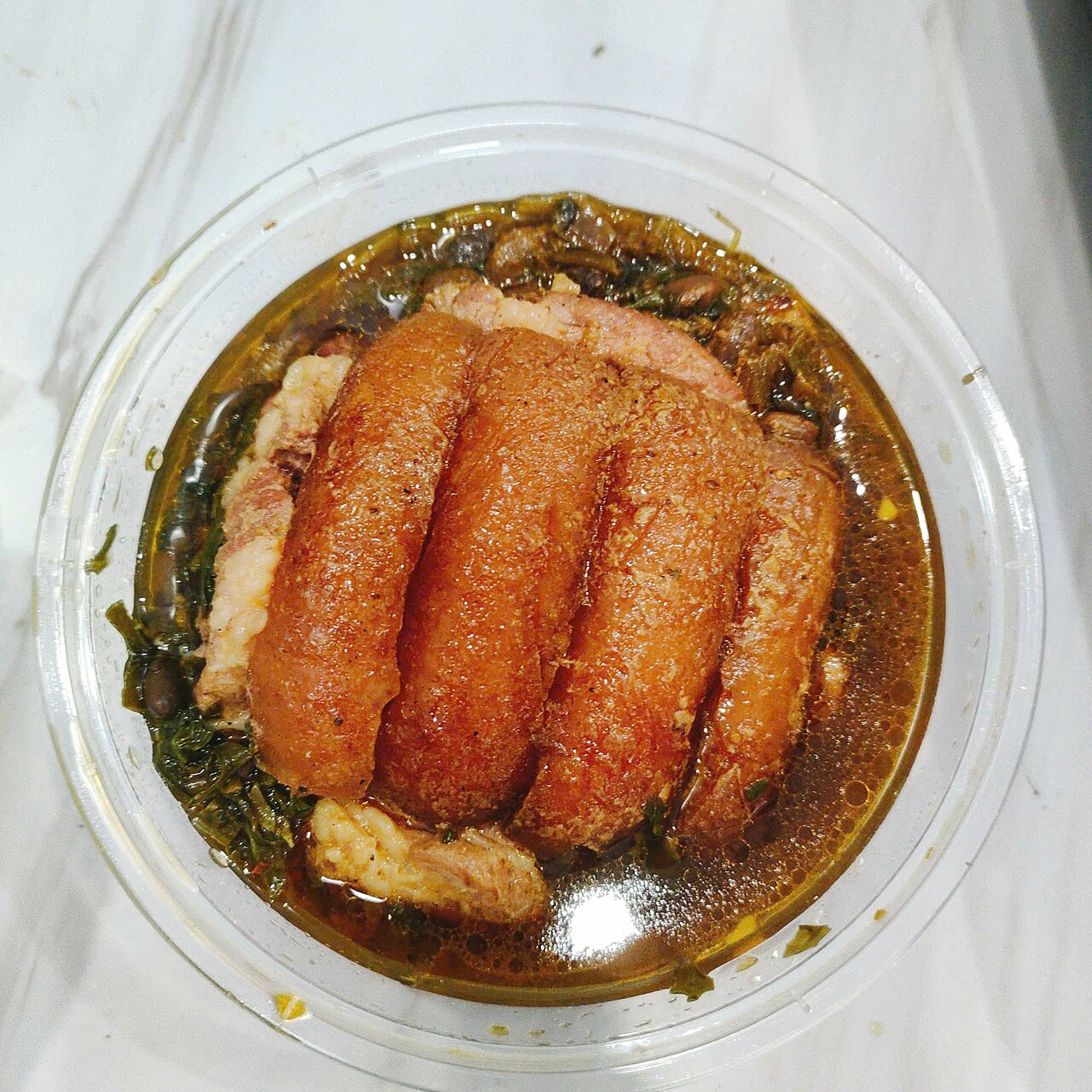
The moment the steamer lid comes off, glossy, tender pork belly releases a rich, savory aroma -- an absolutely indispensable braised meat on Tày and Nùng wedding and festival tables. Visitors trying it for the first time are always surprised at just how melt-in-the-mouth the meat has been braised to be.
Cross-confirmed by state media as an essential Tày-Nùng festival braised pork
Cao Bằng's official provincial party newspaper, state broadcaster Vietnam Television (VTV), and the Ministry of Industry and Trade's official outlet cross-confirm this braised dish as a Tày-Nùng tradition: pork belly is first fried until the skin browns, then braised and steamed for hours until melt-in-the-mouth, glossy, and tender -- an essential dish for festivals and weddings, widely served at restaurants in the city. Several sources describe this only under the general name "Cao Bằng" (province/city-wide), with no dispute over a specific district of origin.
Honest clarification: also known as khâu nhục, sharing common roots with the steamed-pork-belly dishes of Guangxi and Yunnan, not a Cao Bằng invention
It has to be said honestly that this dish is also known as khâu nhục or khấu nhục, sharing common roots with the steamed-pork-belly dishes ("kau yuk"-style) of China's Guangxi and Yunnan regions -- it isn't a Cao Bằng invention. This entry records this only as an observation of shared culinary roots; the exact founding period and whether it derives directly from southwestern China's steamed-pork-belly tradition have no precise historical backing and aren't adopted as settled fact. Its status as an essential festival dish is unaffected, but this entry honestly notes this dish's naming and preparation lineage's connection to a cross-border culinary tradition, rather than overstating it as a purely Cao Bằng original.
How to Eat It Like a Local
- Widely served at restaurants in Cao Bằng City -- freshly made versions are easier to find during festivals and weddings.
- The traditional way to eat it is with plain rice -- a glossy, tender piece of meat is a simple way to judge the cook's skill.
- Eat it hot -- once it cools, the fat solidifies and affects the melt-in-the-mouth texture.
An Honest Look at This Braised Dish's Origins
- Also known as khâu nhục or khấu nhục, sharing common roots with the steamed-pork-belly dishes of China's Guangxi and Yunnan regions -- not a Cao Bằng invention.
- The exact founding period and whether it derives directly from southwestern China's tradition have no precise historical backing -- this entry doesn't treat either as settled fact.
- Several sources describe this only as a general "Cao Bằng" dish -- there's no dispute over a specific district of origin.
Pick up a piece of melt-in-the-mouth braised pork, and its savory richness slowly unfolds in the mouth. This dish may share roots with a culinary tradition a thousand miles away, but the solemnity with which the Tày and Nùng people bring it to the wedding table has long since become Cao Bằng's own festival memory.