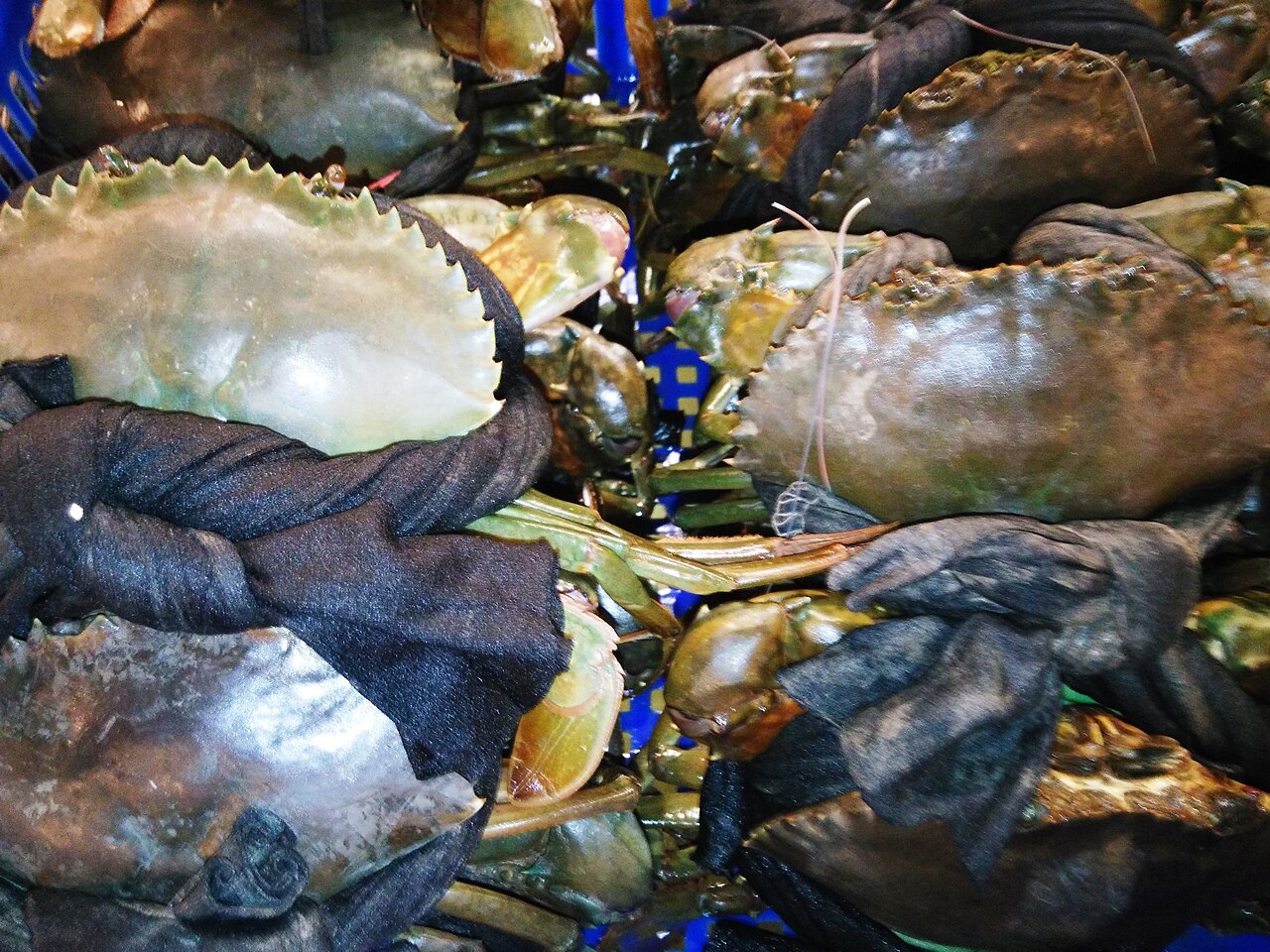
Baskets of blue-grey crabs, tied tight and stacked high at the market -- the vendor doesn't need to say much more than "Ca Mau crab" to make the sale. This is one of the rare Vietnamese aquatic products to carry an official geographical indication, though the mangrove tidal flats where they actually grow lie beyond Ca Mau City's own territory.
Certified directly by the National Office of Intellectual Property, one of Vietnam's rare aquatic-product geographical indications
The National Office of Intellectual Property of Vietnam formally granted geographical indication certificate No. 00116 to "Cua Ca Mau" under Decision No. 2576/QD-SHTT on June 8, 2022 -- one of the rare aquatic products in Vietnam to carry this level of certification. The Ministry of Industry and Trade's "Proud of Vietnamese Goods" column and industry media cross-confirm that Ca Mau crab is prized for its fine texture and rich roe, ranking among the country's most nationally recognized crab varieties.
Honest clarification: the core farming zone is in the coastal mangrove districts beyond the city's own territory
It has to be said honestly that the geographical indication's designated area covers mangrove farming zones such as Rach Goc town in Ngoc Hien district and Nam Can district, with the core farming zone in coastal districts like Dam Doi and Phu Tan -- not within Ca Mau City's own territory. The city itself functions mainly as a trading market and restaurant hub, the main place visitors buy and taste Ca Mau crab, rather than the waters where it actually grows. This entry honestly discloses that distinction.
How to Eat It Like a Local
- Major seafood markets and restaurants across Ca Mau City widely sell fresh-caught crab -- look for a firm shell and a heavy, dense feel.
- The traditional way to eat it is steamed or grilled, to preserve the natural flavor of the meat and roe.
- To trace the true farming waters, plan a trip out to Rach Goc town in Ngoc Hien district.
An Honest Look at This Crab's Origins
- The geographical indication's designated area clearly covers mangrove farming zones across coastal districts -- not Ca Mau City's own territory.
- The city is where the crab is traded and tasted, not the water it actually grows in.
- This is one of the rare Vietnamese aquatic products with an official geographical indication -- this entry does not overstate or speculate about origins beyond the certified area.
Crack the shell open and rich roe melts on the tongue -- that sweetness comes from the rise and fall of mangrove tides doing their slow work. Ca Mau City's table is only the last, liveliest stop on that journey.