On a hillside at roughly 1,650m elevation, rows of coffee trees follow the contour lines, morning mist still lingering — this is Cầu Đất Farm, a tea-and-coffee estate in Đà Lạt's Cầu Đất village, its factory built by the French in 1927, a living witness to this highland city's agricultural colonial history.
A 90-year history and colonial-era survey documented by local state media
The local state outlet Báo Lâm Đồng điện tử has run multiple features documenting Cầu Đất's tea estate history, dating back to the factory's founding by the French in 1927 — over 90 years. Multiple independent outlets, including Mia.vn and htv.vn, also cross-confirm the colonial history of the French selecting this highland site for growing tea and coffee after Alexandre Yersin's 1893 survey of the plateau. Cầu Đất is also a well-known Vietnamese Arabica coffee and black tea growing region, its flavor distinctive thanks to high elevation and a large day-night temperature swing.
Honest clarification: a rural estate destination, not a storefront-style entry
Worth noting honestly: Cầu Đất village sits within Xuân Trường Commune of the former Đà Lạt City, a rural agricultural area rather than a downtown commercial district — clearly different in nature from this guide's other street-food anchor points, as this is a production origin and estate destination rather than a single shop. Getting there requires a roughly 20km drive out of the city center, not suited to a walkable downtown itinerary — worth setting aside half a day or more for the round trip and visit.
How to Plan Your Visit
- Set aside half a day or more, including round-trip driving time and time to tour the estate.
- Arriving before the morning mist clears is the best time to experience the highland tea-and-coffee estate's atmosphere.
- Take the chance to learn about the growing and processing of both Arabica coffee and black tea.
An Honest Look at This Destination's Nature
- Cầu Đất village sits in the rural Xuân Trường Commune, different in nature from this guide's downtown street-food anchor points.
- This is a production origin and estate destination, not a single storefront — a drive is required.
- The factory's 1927 founding under French rule is concrete evidence of Đà Lạt's agricultural colonial history.
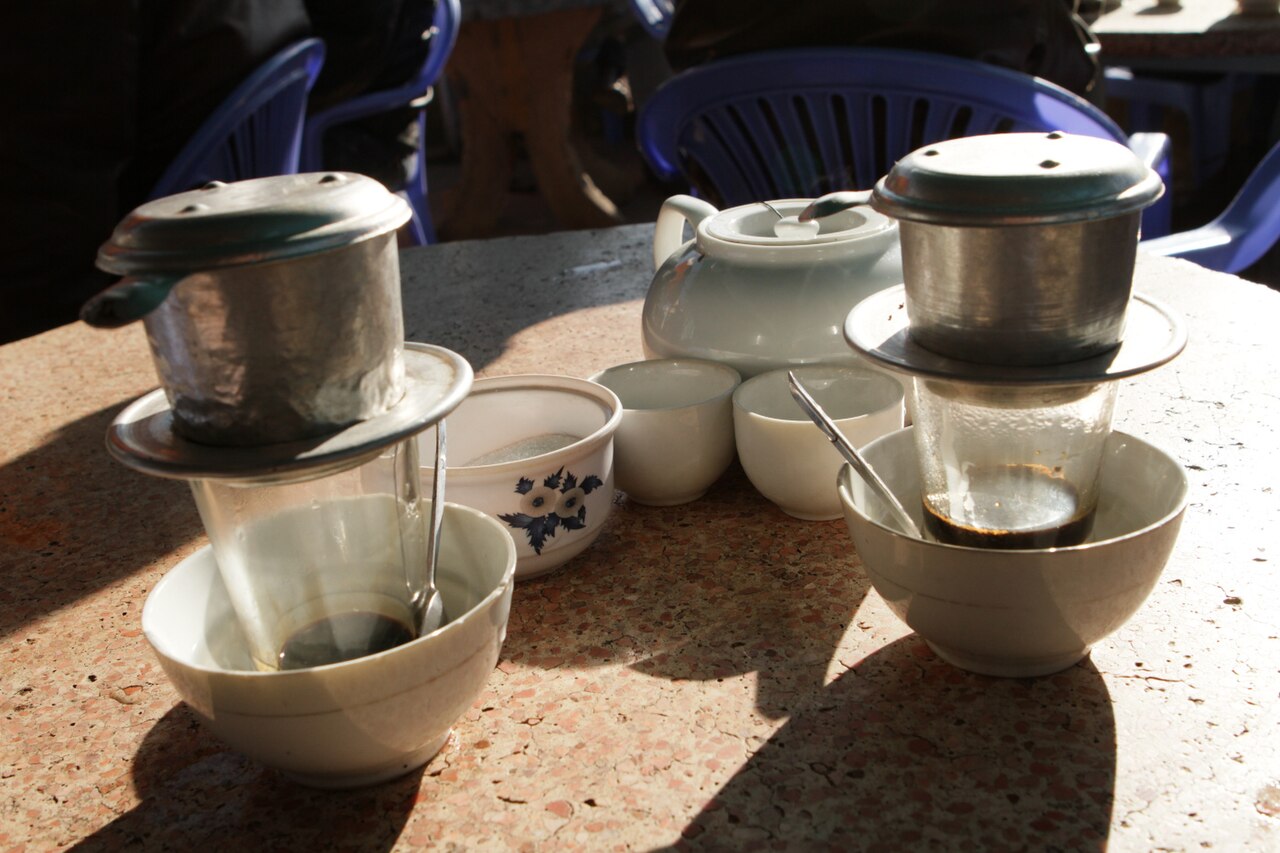
A cup of Cầu Đất coffee carries nearly a century of colonial agricultural legacy on the highland — from Yersin's 1893 survey to the estate's 1927 founding, this coffee's story runs deeper than any bowl of noodles downtown, well worth the drive out to visit.