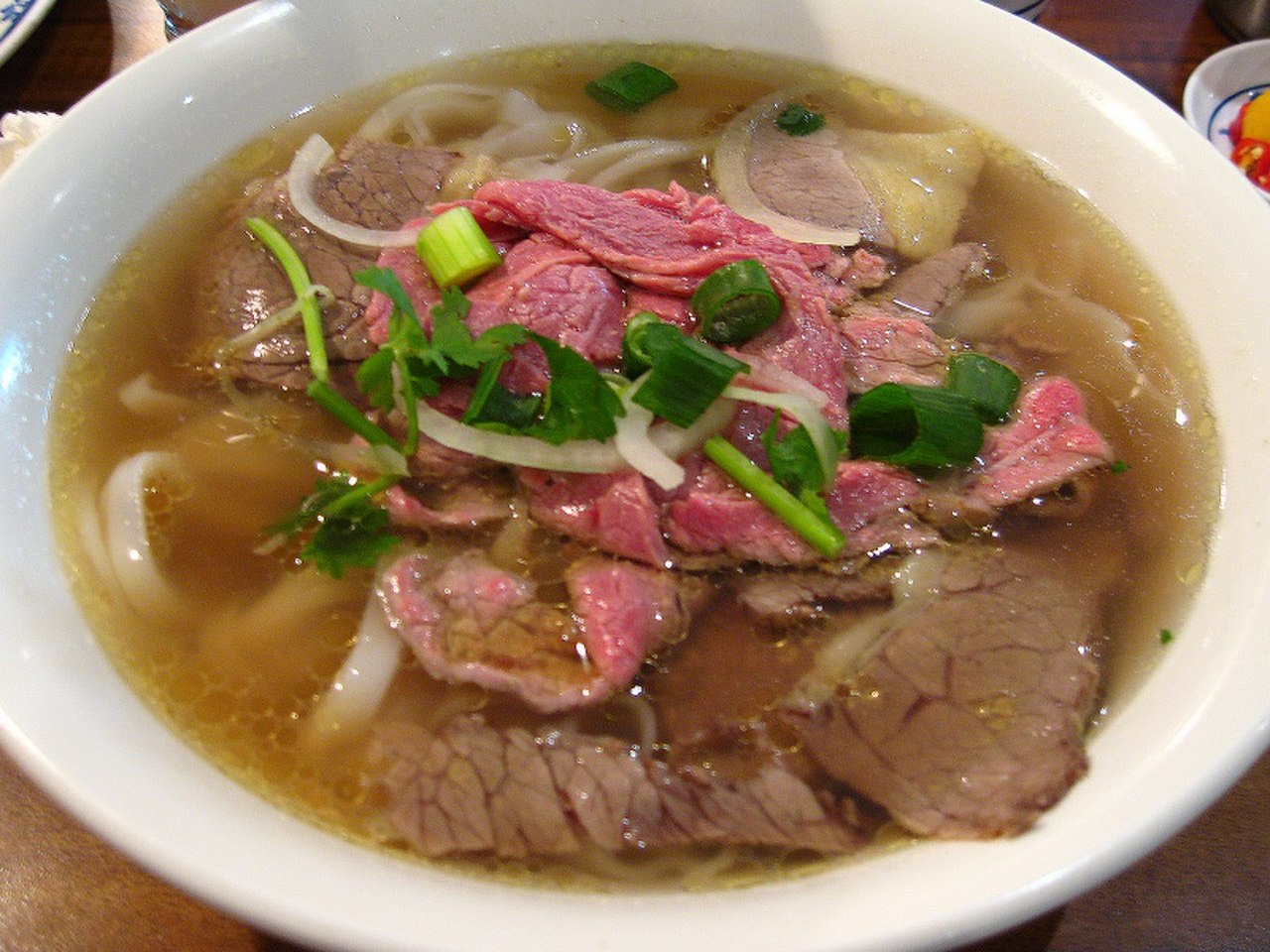
A clear beef bone broth, flat rice noodles, a few slices of raw or well-done beef, all finished with a scattering of scallions and coriander — this is the Vietnamese flavor the whole world recognizes, yet for Hanoians it's simply breakfast, eaten nearly every day. The old shop on Bát Đàn Street opens before dawn and closes the moment it sells out; a line stretching to the corner is the norm. This noodle soup has long since become the city's own calling card.
What pho is, and why Hanoians are so proud of it
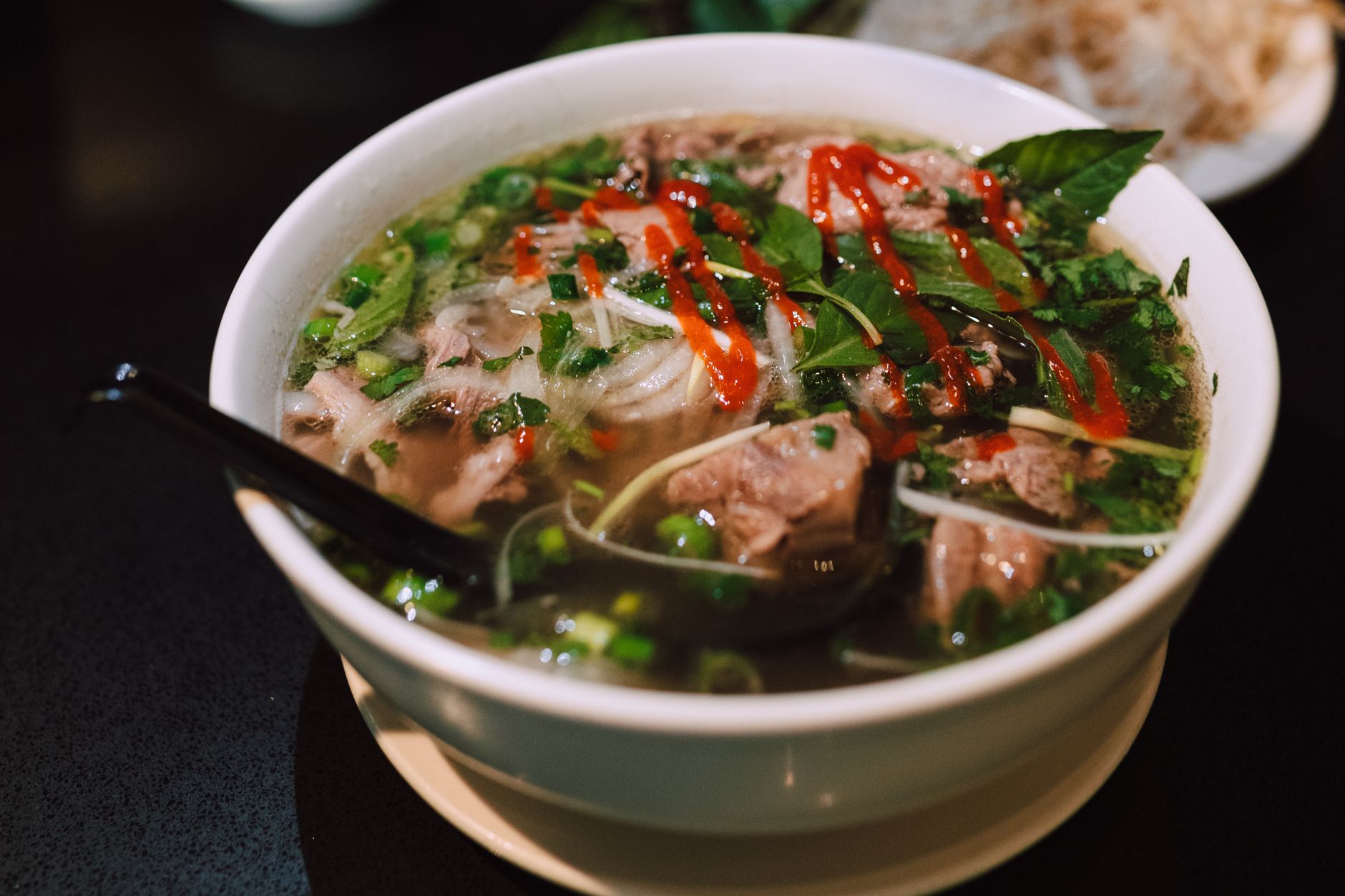
The bones of pho are simple: a clear broth simmered for hours from beef bones and spices, blanched flat rice noodles, topped with either raw-sliced beef (cooked by the hot broth itself) or pre-braised beef brisket, finished with scallions and coriander, sometimes a touch of garlic vinegar or chili. The broth is clear but never thin, its aroma drawn out from beef bones together with star anise, cinnamon, and charred ginger and onion — at the best shops, even the ratio of bones and simmering time is a closely guarded family secret.
Pho's actual birthplace was Nam Định Province, where scholars generally agree it took shape around 1900–1907, only arriving in Hanoi in the 1920s to be perfected and embraced here as the dish's 'spiritual home.' In 2024, both the Hanoi and Nam Định styles of pho were jointly recognized as part of Vietnam's National Intangible Cultural Heritage — each city has its loyalists, and neither claims sole authenticity.
How to eat it like a local
The anchor shop and other essential stops
Phở Gia Truyền Bát Đàn (49 Bát Đàn Street) has been open since the 1960s, over 60 years now, and is regularly singled out by outlets like CNN as an essential Hanoi experience; the Michelin Guide has awarded it a Bib Gourmand year after year. Its trademark is the old-school self-service ritual — pay first, then carry your own bowl to a seat — in surroundings plain to the point of spartan, yet to Hanoians, this is exactly what pho is supposed to look like.
If you'd rather skip the self-service scrum and the crowds, the Old Quarter also has Phở Thìn Lò Đúc, founded in 1979 and named by CNN as one of Hanoi's best (its signature is 'phở tái lăn,' beef stir-fried before it's dropped into the broth — a distinctly different style from Bát Đàn's clear broth) — plus the well-known Phở 10 Lý Quốc Sư, also in the Old Quarter. Both are worth putting on your itinerary for comparison.
Local know-how
Prices and hours (verified July 2026)
- A bowl of pho runs about 50,000–60,000 VND; adding a fried breadstick (quẩy) costs roughly 10,000 VND more.
- Phở Gia Truyền Bát Đàn only serves during two fixed windows (roughly 6:00–10:00 and 18:00–20:30); it's usually sold out and closed by midday, so it's worth double-checking that day's hours before you go.
- A phrase to order with: 'Cho tôi một bát phở bò tái, ít hành.' (One bowl of pho with raw beef, easy on the scallions.)
Tips before you go
- Peak hours mean long lines and a self-service system — on your first visit, watch how locals queue and pay before jumping in; don't be shy about asking.
- Blunt, no-frills service is standard at old shops like this — it's not aimed at tourists, so don't let it color your meal.
- For the freshest beef, go as early as possible; by closing time, what's left has often gone cold.
Pho was born in Nam Định and made famous in Hanoi — this bowl of clear broth carries an entire chapter of Vietnamese culinary history, and the morning queue on Bát Đàn Street is the best possible introduction to it.