
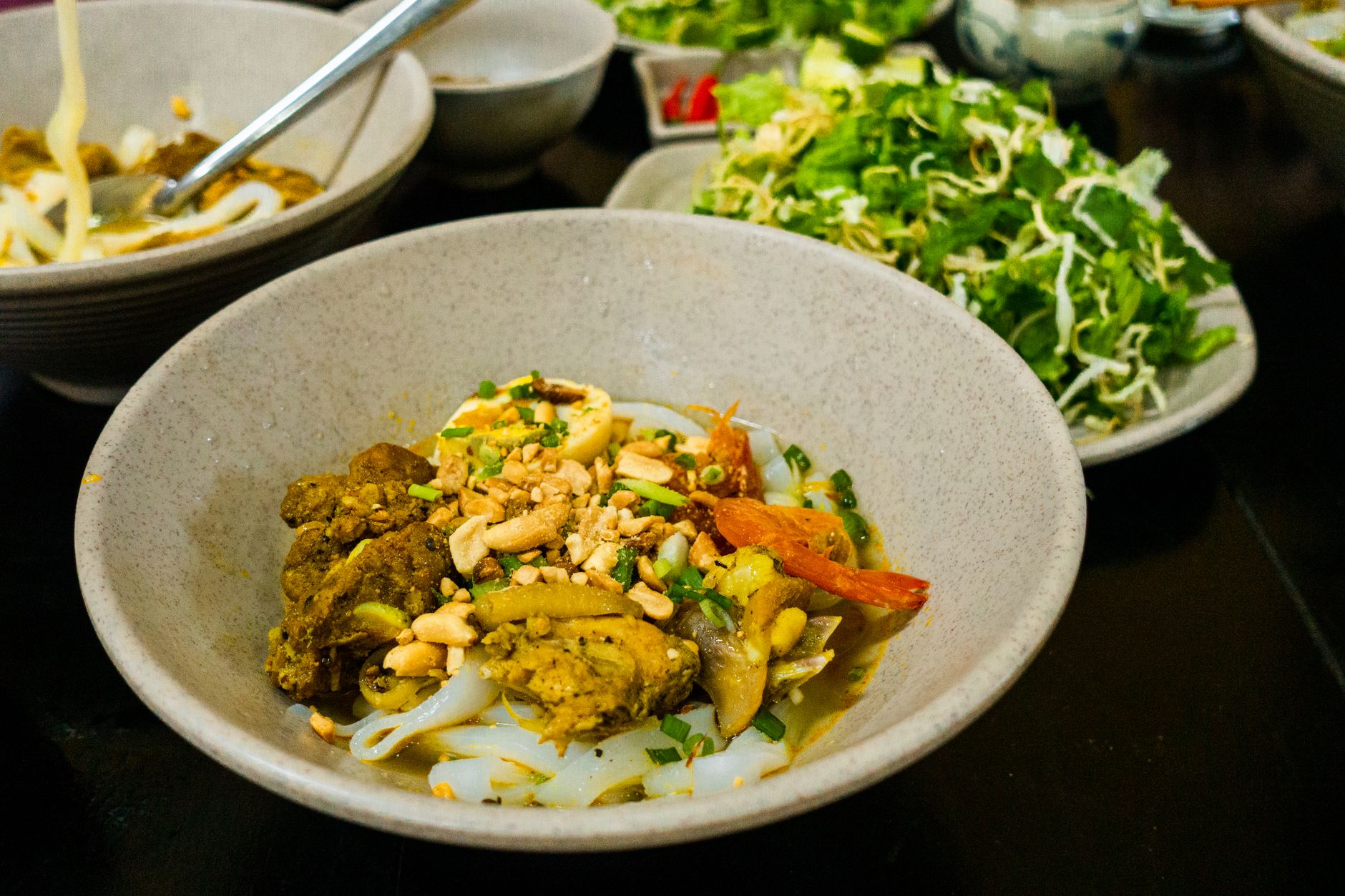
A bowl of golden-yellow flat rice noodles, broth only reaching halfway up the ingredients, topped with shrimp, pork, a boiled egg, crushed peanuts and a crisp rice cracker — this is the shared pride of Da Nang and the wider Quảng Nam region: Mì Quảng. It doesn't win you over with a rich broth; it's the direct, turmeric-coated noodles tossed in concentrated sauce that do the talking. Locals in Da Nang happily eat it two or three times a day without ever tiring of it.
What is Mì Quảng?
Mì Quảng literally means "Quảng Nam noodles" — the Quảng in its name refers to Quảng Nam Province itself. Da Nang was actually part of Quảng Nam Province until 1997, and in 2025 Quảng Nam was administratively merged back into Da Nang, so the two places share the same culinary roots. The rice noodles are dyed yellow with turmeric and cut into wide, flat strands, tossed rather than submerged in broth — this is what sets it apart from Hanoi's phở or Southern Vietnam's rice noodle soups.
In August 2024, "Quảng Nam Folk Wisdom — Mì Quảng" was added to Vietnam's National Intangible Cultural Heritage list by the Ministry of Culture, Sports and Tourism, filed under the original Quảng Nam Province before it merged into Da Nang; the later administrative reshuffle doesn't affect the validity of the designation itself. The MICHELIN Guide has also run a feature specifically on it, "What Is Mi Quảng — the Noodle Dish that Defines Da Nang," naming it the signature noodle dish of the city.
How to eat it like a local
Anchor shop and other notable spots
The anchor shop, Mỳ Quảng Sứa Hồng Vân, sits at 59 Lê Hồng Phong Street in Hải Châu District, near Dragon Bridge (Cầu Rồng). It's a MICHELIN Bib Gourmand recommended spot known for its refreshing version made with jellyfish (sứa), served alongside the traditional pork-and-shrimp version.
Da Nang has no shortage of old Mì Quảng shops, and this list uses Hồng Vân as an anchor rather than the sole authentic version. Mì Quảng Bà Vị on Lê Đình Dương Street is another 40-plus-year institution that has survived three relocations and still stands, specializing in the traditional pork version — a good point of comparison.
Practical information
Prices & hours
- A bowl costs roughly 30,000–40,000 VND (about NT$37–49, verified July 2026); Hồng Vân only serves breakfast and lunch, roughly 6:00am–1:30pm, closing once the afternoon arrives.
- Bà Vị is open all day, roughly 6:00am–10:30pm, giving more flexibility if you want to avoid the tourist rush.
Tips before you go
- Dozens of old shops across the city each have their own loyal fans — the MICHELIN nod doesn't mean it's the one true version, so it's worth comparing at least two before deciding your favorite.
- The turmeric powder stains easily, so be careful if you're wearing light-colored clothing.
One line of Vietnamese to order
- "Cho tôi một tô mì Quảng" — "One bowl of Mì Quảng, please." Simple and effective; any stall will understand and serve you right away.
Compiled from the official MICHELIN Guide feature, the Vietnam Ministry of Culture, Sports and Tourism's heritage announcement, and multiple local lifestyle media reports; differences between the administrative boundary change and the scope of the heritage designation have been noted. Photos pending Dio's own on-site shoot.