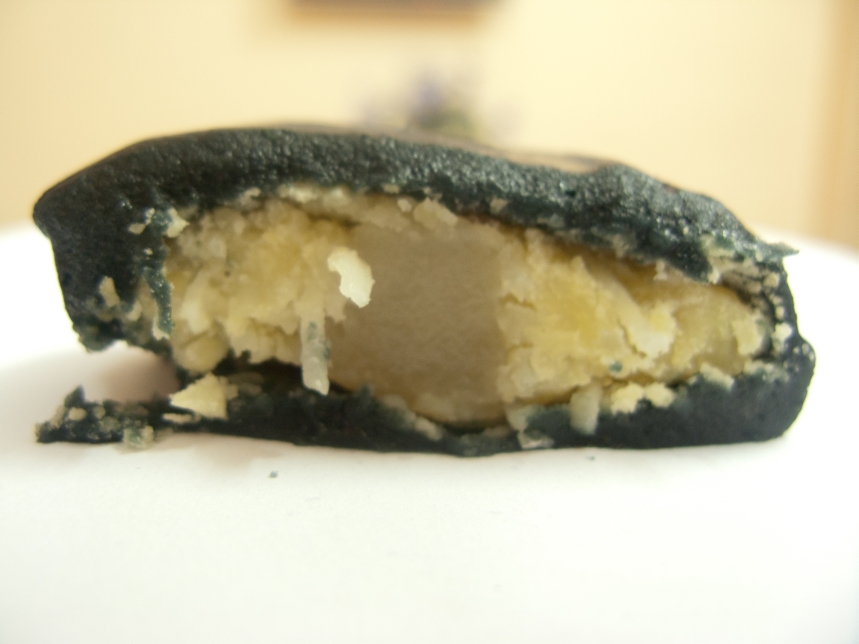
In the Lộc Hạ ward by Cầu Ốc bridge, the aroma of gai-leaf sticky rice steam drifts from household after household -- dark green rice cakes wrapped around a filling of crushed Java-almond seeds. This is a homegrown Nam Định treat, and it's a full century older than the commercial brand that later made it famous.
Explicitly recorded by the provincial party newspaper as a craft rooted within the city -- the Java-almond filling is Nam Định's own signature
State media Báo Nam Định, the provincial party newspaper, explicitly records that bánh gai originated in the Cầu Ốc area of Phường Lộc Hạ (now part of Nam Định City's own territory), where gai leaves have long grown abundantly, with a filling distinguished by Java-almond seeds (hột bàng) -- a traditional craft rooted within the city, not transplanted from a surrounding district. A separate Thanh Niên report, a mainstream outlet, records that in 1978 a Nam Định-born woman known as "Bà Thi," who had been living in Saigon, brought the recipe back home and taught it to a baker on Hoàng Ngân street; Bà Thi herself sold it door to door on Trần Hưng Đạo street, and it gradually grew into a well-known brand.
Honest clarification: "the Cầu Ốc craft origin" and "the Bà Thi brand" are two distinct layers of the story
It has to be said honestly that "Cầu Ốc" refers to this cake's geographic origin and century-old craft roots, passed down within the city's own Lộc Hạ ward since ancient times, while "Bà Thi" is a commercial brand name that only emerged after 1978. Visitors often conflate the two, but this entry honestly draws the distinction, so that "Bà Thi" isn't mistaken for the century-old craft itself. It also has to be honestly disclosed that this guide's Thanh Hóa entry already includes a dish in the same bánh gai family, the "Tứ Trụ black sticky rice cake" -- but the Thanh Hóa version follows a different village recipe with no Java-almond feature, so the two can be clearly distinguished by filling and by their city-versus-village craft context, and this is judged not to be a duplicate.
How to Eat It Like a Local
- The Cầu Ốc area of Lộc Hạ ward is the craft's birthplace, though other bakeries across the city sell it widely too.
- The traditional way to eat it is to peel back the leaf and eat it directly, taking in the aroma of the gai-leaf rice and Java-almond filling.
- It keeps reasonably well, making it a good souvenir for a longer trip.
An Honest Look at This Cake's Origins
- "Cầu Ốc" is the geographic and craft origin, while "Bà Thi" is a commercial brand name that only emerged after 1978 -- the two layers of the story shouldn't be conflated.
- This guide's Thanh Hóa "Tứ Trụ black sticky rice cake" entry has been honestly compared -- the two differ in village recipe and filling features, and are judged not to be a duplicate.
- The craft origin is explicitly within Nam Định City's own Lộc Hạ ward, giving it a stronger geographic anchor than most other items on this list.
Peel back a leaf and the aroma of gai-leaf sticky rice rises up, the texture of the Java-almond seeds coming through with every bite. This cake carries a recipe that generations of Lộc Hạ families have kept by Cầu Ốc bridge -- the "Bà Thi" name may be the famous one, but the real root has always stayed planted in this stretch of the city.