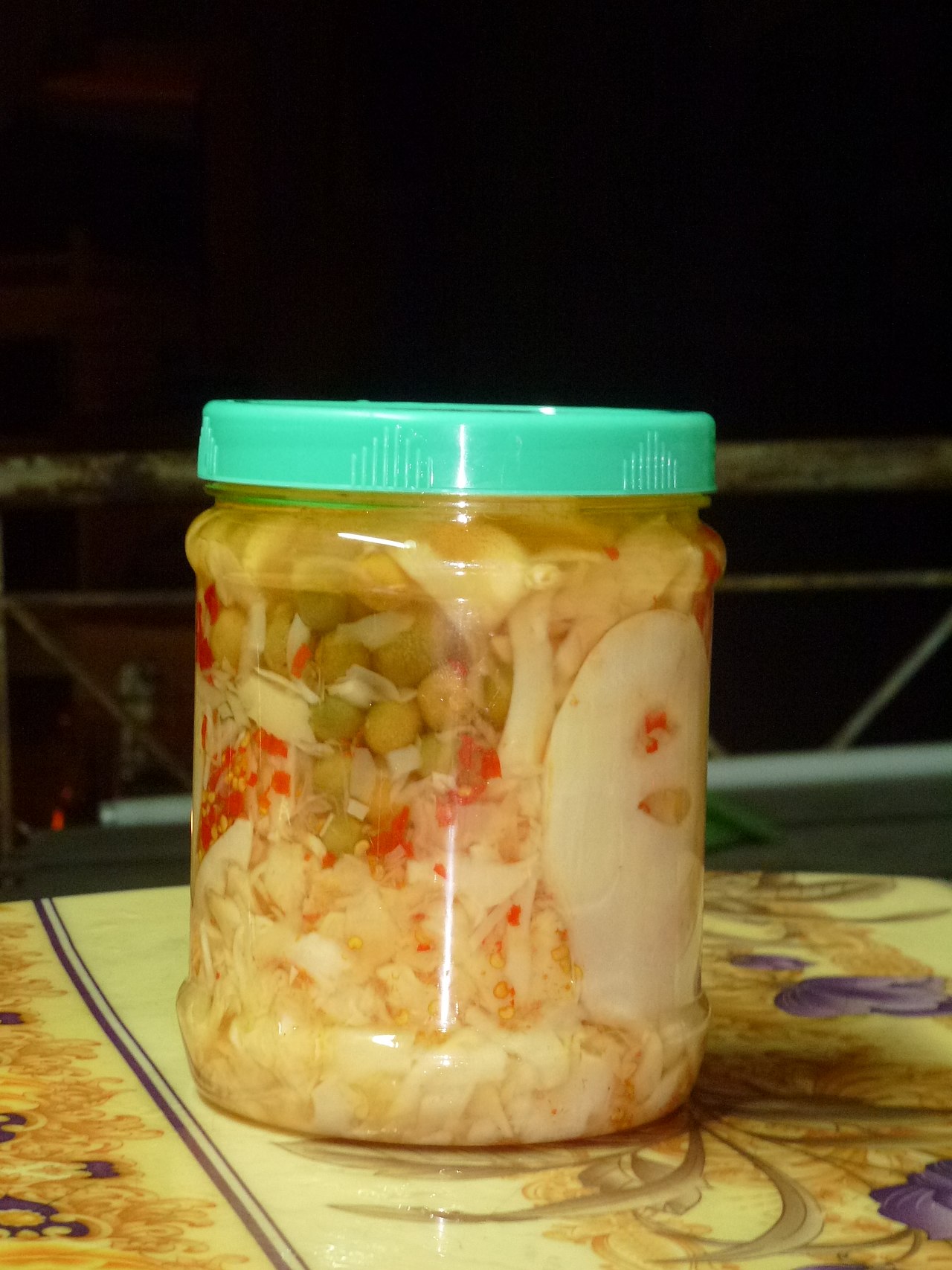
At the dry-goods stalls in the city-center market, sacks of dried bamboo shoots and jars of pickled ones stack up. Once June and July's harvest season passes, these mountain products — sourced from bamboo groves in the surrounding communes — become a year-round fixture at Sa Pa's market stalls.
Provincial state media and independent agricultural e-commerce outlets cross-confirm the processing tradition; Lào Cai had 269 OCOP-certified products as of early 2025
Provincial state media baolaocai.vn ran a feature, "Măng khô - đậm đà hương vị núi rừng," and independent agricultural e-commerce outlets laocaifoods.com ("MĂNG RỐI MẦM SAPA, ĐẶC SẢN LÀO CAI") and bachafood.com cross-confirm Lào Cai province's (including Sa Pa's surrounding highland communes) bamboo shoot harvesting and processing tradition. Lào Cai province had 269 OCOP-certified products as of early 2025. Bamboo shoots come in two main forms: dried (măng khô, keeps for up to 2 years) and pickled-sour (măng chua, fermented for 20–30 days), sourced from bamboo groves in surrounding communes such as Tả Van, Bản Hồ, and Nậm Sài, with June–July as harvest season.
Honest clarification: bamboo shoot processing is a widespread tradition across Lào Cai's highlands, and market stalls commonly mix in produce from several surrounding communes
It has to be said honestly that bamboo shoot processing is a widespread agricultural tradition across Lào Cai province's highlands, not a craft unique to Sa Pa, and the dried goods sold at market stalls commonly mix in produce from several surrounding communes rather than a single source. The market-stall-cluster description here represents a researcher's characterization of a typical market scene rather than a verified, specifically named stall, and this entry honestly discloses that limitation.
How to Buy Practically
- Dried shoots suit long-term storage and home cooking, while pickled shoots have a more sour, tangy flavor that pairs well with hot dishes on the spot.
- Quality and selection are best around June–July's harvest season, so it's worth timing a visit.
- The city-center dry-goods market stalls are the most convenient place to buy, and it's worth comparing quality and price across several stalls.
An Honest Look at This Dried Good's Origins
- Bamboo shoot processing is a widespread agricultural tradition across Lào Cai province's highlands, not a craft unique to Sa Pa.
- The dried goods sold at market stalls commonly mix in produce from several surrounding communes rather than a single source.
- The market-stall-cluster description is a researcher's characterization of a typical scene, not a verified, specifically named stall.
A sack of dried bamboo shoots and a jar of pickled ones sit at a market stall, and the mountain-forest aroma is genuinely rich and real. But this processing craft is spread across bamboo groves and farming households throughout Lào Cai's highlands — Sa Pa's market simply gathers the harvest of several surrounding communes and lays it all out for visitors to see.