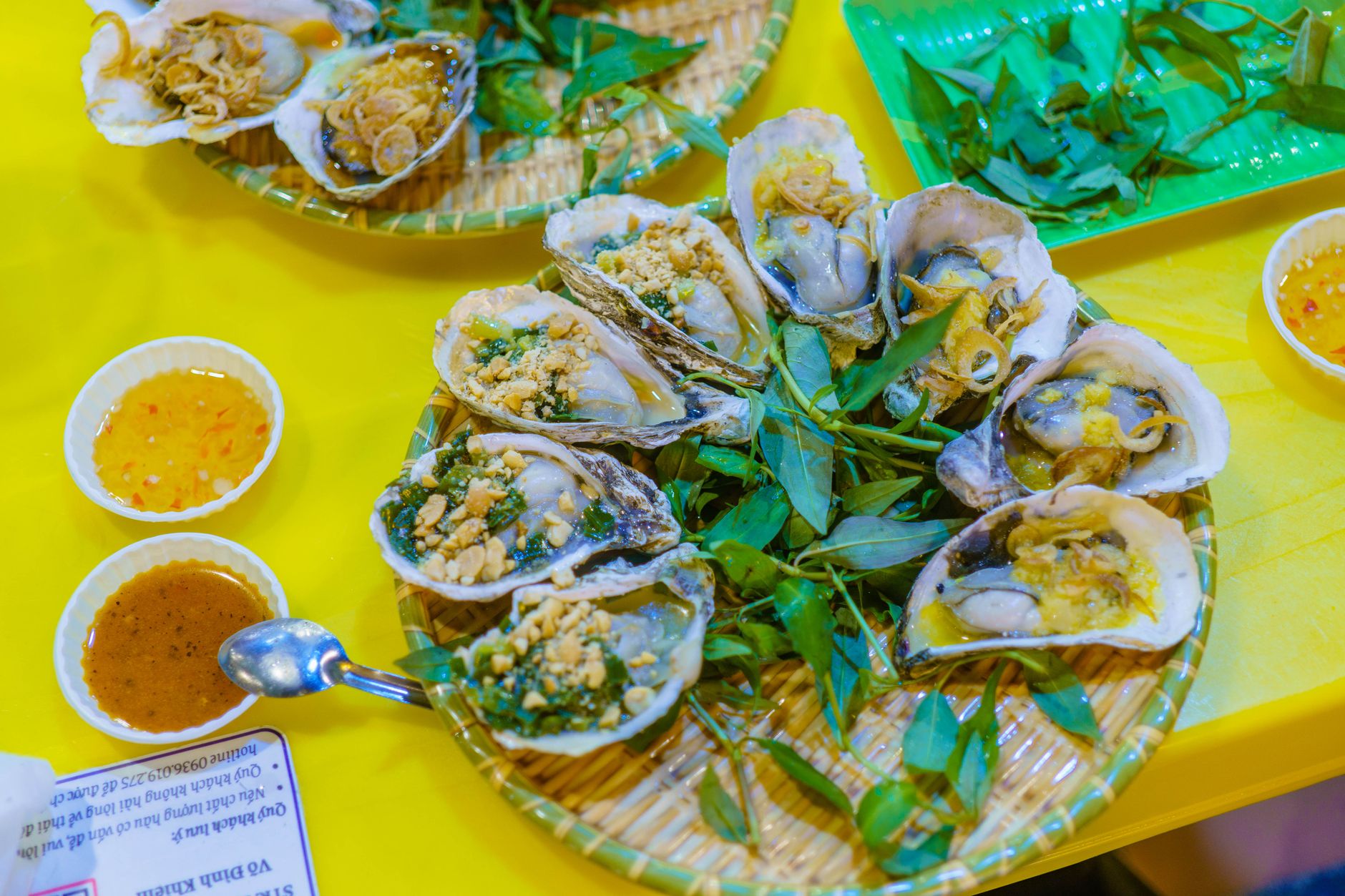
A restaurant serves up a plate of shucked oysters, plump and rich -- the owner calls them "Dat Mui oysters." Dat Mui is the landmark at Vietnam's southernmost point, and cage farmers have raised these oysters relying on its alluvial silt and abundant plankton -- though that cage-farming water, too, lies beyond Ca Mau City's own territory.
Cross-confirmed by the tourism department, mainstream news, and fisheries-industry media as a specialty tied to a landmark
Ca Mau's official tourism website, Tien Phong (the Ho Chi Minh Communist Youth Union's official newspaper), and fisheries-industry media tepbac.com cross-confirm that Dat Mui residents began a cage-oyster-farming trial in 2005, forming a 25-household cooperative in 2007. Today there are over 35 cages, producing roughly 250-300 tons a year. The oysters rely on Dat Mui's alluvial silt and abundant plankton, growing plump and rich -- a fisheries specialty tied to the landmark of "Vietnam's southernmost point."
Honest clarification: the core production area is Dat Mui in Ngoc Hien district, not within the city; judged not a duplicate of Vung Tau's oyster porridge
It has to be said honestly that the core production area is not within Ca Mau City's own territory but rather the Dat Mui area under Ngoc Hien district -- restaurants in the city mainly serve it, but the city's own territory isn't the farming water. This entry also honestly discloses a cross-check against an existing city in this guide: Vung Tau already features "Chao hau Long Son" (Long Son oyster porridge), but the dish form (porridge versus raw or char-grilled), region (southeastern coast versus the Mekong Delta's southernmost tip), and farming ecology all differ -- judged not a duplicate. The annual yield figure of "250-300 tons" comes from industry and official tourism-website reporting, not a formal census statistic, and this entry honestly notes the nature of that data.
How to Eat It Like a Local
- Widely served at restaurants in Ca Mau City -- the traditional way to eat it is raw or char-grilled with a dipping sauce.
- Look for shops that specifically advertise a "Dat Mui" origin, more likely to serve cage-direct stock.
- To see the cage farms firsthand, plan a trip to Dat Mui in Ngoc Hien district, near the country's southernmost landmark.
An Honest Look at This Oyster's Origins
- The core production area is around Dat Mui in Ngoc Hien district, not within Ca Mau City's own territory -- restaurants in the city mainly serve it.
- This entry has honestly cross-checked against Vung Tau's oyster porridge already in this guide -- the dish form and farming ecology differ, judged not a duplicate.
- The annual yield of "250-300 tons" comes from industry and tourism-website reporting, not a formal census statistic.
Eat a Dat Mui oyster raw and the briny, savory scent of the sea unfolds on the tongue. This oyster comes with no gentle porridge wrapping -- just the raw sweetness raised by alluvial silt at the country's southernmost point, plain and direct.