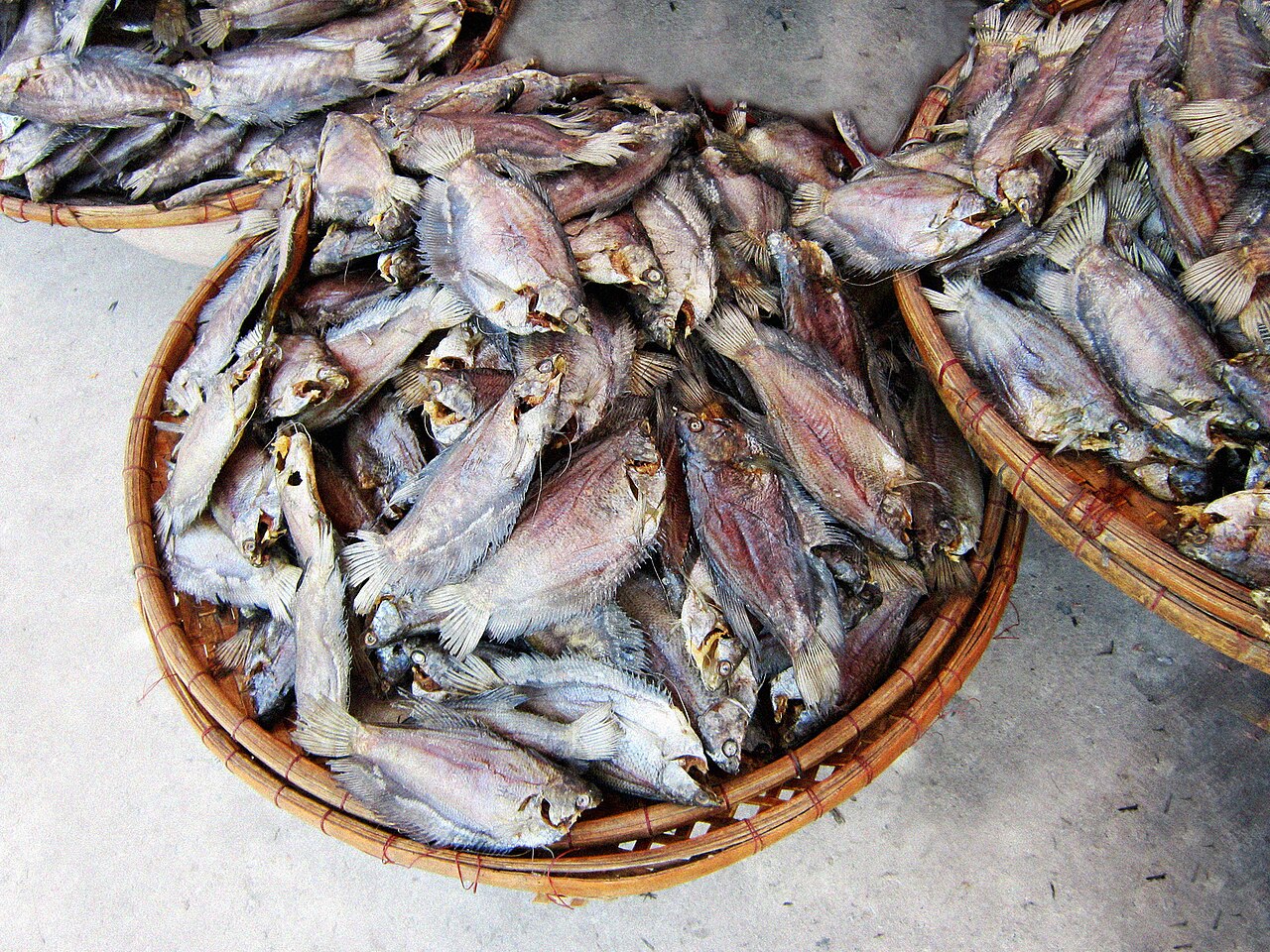
Rows of snakehead gourami lie spread out on drying racks under the sun, their bodies slowly shrinking and taking on a glossy sheen -- vendors call it "boi fish." This savory, chewy dried fish was certified with a collective trademark in 2011, the fruit of generations of U Minh's peat-forest residents living off the water, though that wetland actually lies beyond the city.
Cross-confirmed by government bodies and state media as a collective-trademark dried fish
Ca Mau's provincial Farmers' Union official website, the Ministry of Justice's official legal newspaper, and travel media cross-confirm that the National Office of Intellectual Property approved the "Ca kho boi U Minh" collective trademark on December 22, 2011, held by Tran Van Thoi district's Farmers' Union. The raw fish, "ca boi" (snakehead gourami, ca sac ran), lives in U Minh's year-round-flooded peat-forest environment; sun-dried into jerky, it turns savory and chewy -- a representative preserved aquatic product of Ca Mau.
Honest clarification: the core production area is the peat forests of U Minh and Tran Van Thoi districts, not within the city; judged not a duplicate of Chau Doc's dried fish
It has to be said honestly that the core production area is the mangrove/peat-forest freshwater wetlands of U Minh and Tran Van Thoi districts -- not within Ca Mau City's own territory. This entry also honestly discloses a cross-check against an existing city in this guide: Chau Doc already features "Kho Ca Chau Doc" (dried snakehead and pufferfish jerky), whose raw material is largely imported catch from Cambodia's Tonle Sap Lake, carrying a cross-border trade character. The Ca Mau version's fish species (snakehead gourami), production ecology (locally caught in U Minh's peat-forest freshwater wetlands), and trade context all differ from the Chau Doc version -- judged not a duplicate.
How to Eat It Like a Local
- Widely sold at markets and souvenir shops across Ca Mau City in sealed packaging, good for a long trip.
- The traditional way to eat it is steamed and shredded over rice, or grilled and dipped in sauce.
- To trace the true sun-drying production area, plan a trip to the peat-forest communities around U Minh and Tran Van Thoi districts.
An Honest Look at This Dried Fish's Origins
- The collective trademark explicitly records the holder as Tran Van Thoi district's Farmers' Union -- the core production area is not within Ca Mau City's own territory.
- This entry has honestly cross-checked against Chau Doc's similar dried fish already in this guide -- the fish species and trade context differ, judged not a duplicate.
- The city is the main point of sale, not where the fish is actually caught and sun-dried.
Tear into a piece of savory dried snakehead gourami and the chewy bite carries the taste of sun-drying. This dried fish doesn't travel the road of cross-border trade with Cambodia -- it takes a local route, caught and dried by U Minh's own peat-forest residents.