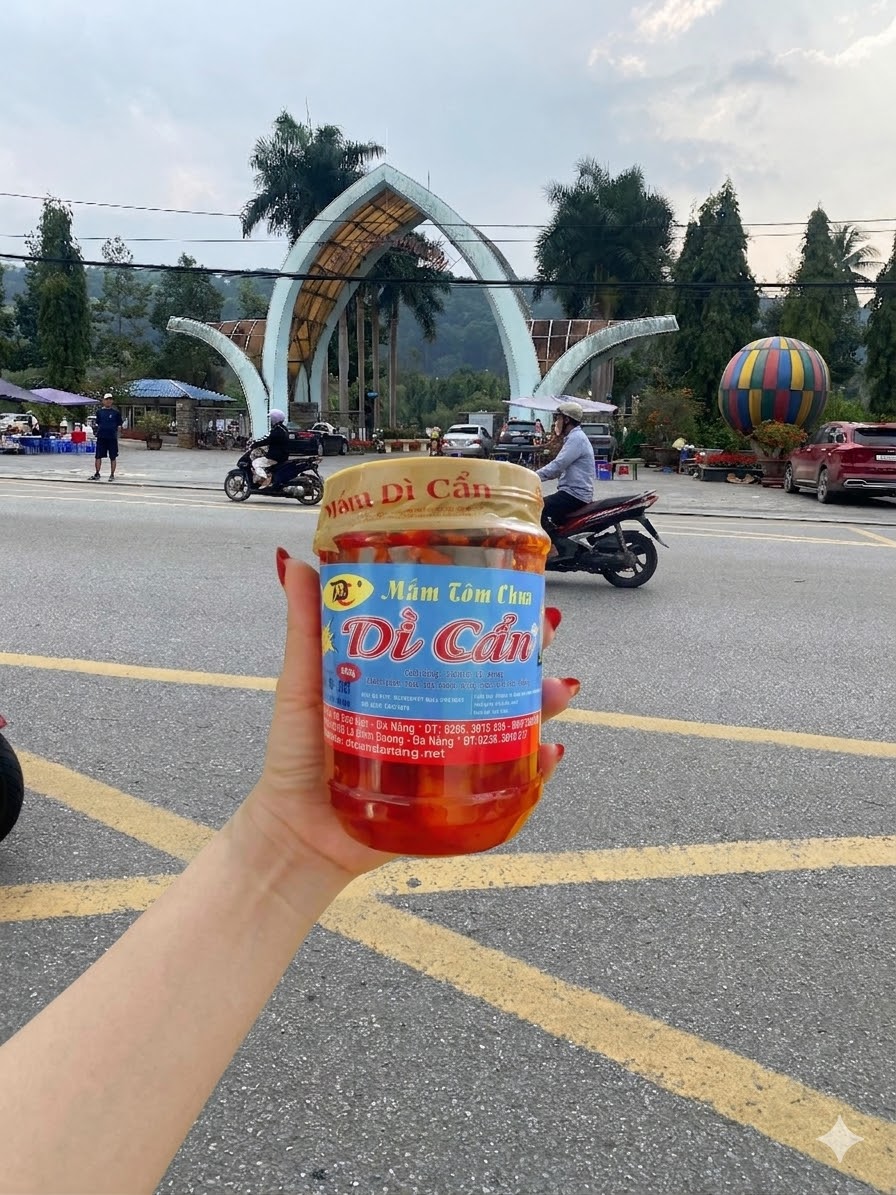
In the workshop at No. 27 Cao Bá Quát Street, jar after jar of pickling shrimp glow orange-red. Fermented fresh shrimp are tossed with shredded pork belly, garlic, chili, and glutinous rice flour, releasing a sharp, sour aroma. This jar of shrimp paste is typically eaten with rice porridge or slices of pork belly, with sour, spicy, salty, and savory flavors bursting on the tongue all at once - a common rice-pairing side dish on Hue tables and a favorite souvenir among visitors.
The Old Establishment on Cao Bá Quát Street
The Vietnamese Wikipedia entry for 'Mắm tôm chua' confirms the existence of this fermented seafood, and the Bà Duệ brand at No. 27 Cao Bá Quát Street in Gia Hội ward is a long-established name well documented by both local sources and e-commerce platforms - the production site doubles as the point of sale, with an additional sales stall on Trương Định Street in Đông Ba Market.
An Honest Correction: The True Birthplace Is Gò Công in the South
According to several Vietnamese-language research articles, the actual birthplace of tôm chua is Gò Công in southern Vietnam (today part of Tiền Giang province). In the early 19th century, it was brought to Hue by the mother of Emperors Thiệu Trị and Tự Đức, who married into the Nguyễn royal court and carried this taste of home with her. After refinement within the royal court, it gradually became known as today's 'Hue specialty.' In other words, the birthplace (Gò Công in the south) and the place now most associated with the dish (Hue) are actually two different locations - the same type of honest clarification as Hanoi phở being 'born in Nam Định, popularized in Hanoi.' A dish's true history is often more complicated than the city name on its label suggests.
How to Bring a Jar Home
- Bà Duệ has a production site at No. 27 Cao Bá Quát Street and a sales stall on Trương Định Street in Đông Ba Market - both are places to buy it.
- As a fermented, pickled food, it makes a great souvenir - best paired with rice porridge, plain rice, or slices of pork belly.
- To ask in Vietnamese, try 'Cho tôi mua tôm chua' (I'd like to buy some sour shrimp paste).
The Birthplace and the Representative Region Are Two Different Things
- According to Vietnamese-language research, the true birthplace of tôm chua is Gò Công in the south (today's Tiền Giang province), not Hue itself.
- It was brought into the Nguyễn royal court in the early 19th century by an imperial mother who married in, and only became known as a 'Hue specialty' after being refined at court.
- This gap between 'birthplace' and 'representative region' isn't rare in Vietnamese culinary history - worth an honest look rather than flattening it into a single origin story.
A jar of sour, spicy, salty shrimp paste carries the story of a journey from the south into the royal court - Hue is simply where it eventually put down roots and became famous through refinement.