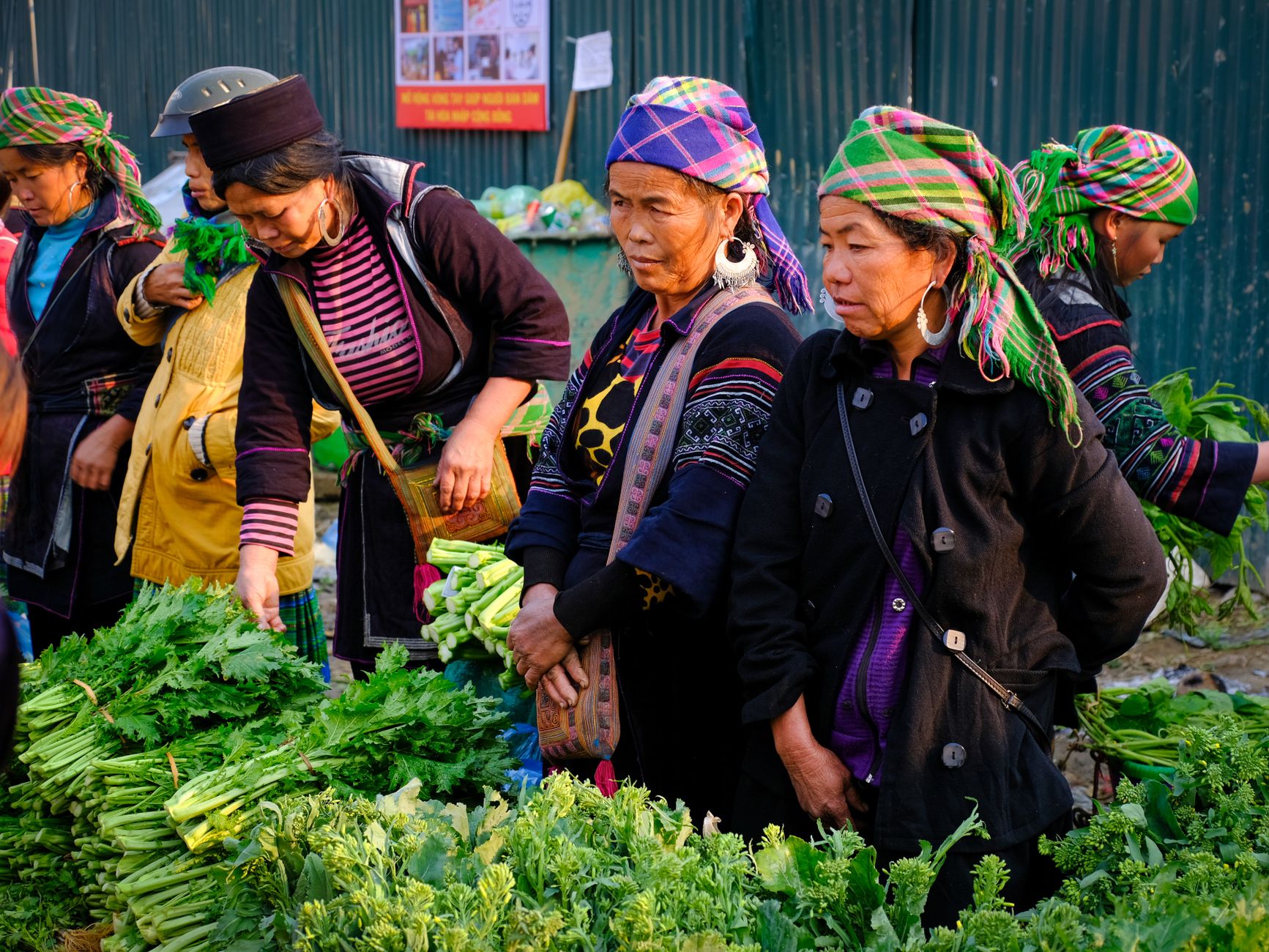
Across the terraced fields of Bản Cát Cát, mustard greens unfurl their deep-green leaves. This vegetable — bitter at first, then sweet, with a satisfying crunch — is a daily staple on H'Mông tables, and it's also the dish tourists in Sa Pa are most likely to see actually growing in the field.
A mainstream financial newspaper carried a feature, and independent travel and agriculture outlets cross-confirm the growing area
Tạp chí Kinh tế Sài Gòn (the Saigon Times, a mainstream Vietnamese financial newspaper) ran a feature, "Cải Mèo rau sạch vùng cao," and independent travel and agriculture outlets bazantravel.com ("Rau cải mèo - sản vật ngọt lành của Sa Pa") and nongsandungha.com cross-confirm that Tả Van, Tả Phìn, Lào Chải, and Bản Cát Cát are traditional H'Mông growing areas. The greens are bitter first, sweet after, with a crisp bite, and are also commonly pickled into sour greens (dưa cải mèo).
Honest clarification: this variety is a shared highland crop across multiple northwest provinces, not a Sa Pa-exclusive strain
It has to be said honestly that this mustard green variety is a native highland crop shared across multiple cold-climate northwest provinces — Lào Cai, Hà Giang, Lai Châu — and the name "Mèo" ("cat," a colloquial reference) actually refers to the H'Mông people themselves, making it a crop shared across ethnic communities rather than a Sa Pa-exclusive strain. This entry anchors on Bản Cát Cát (now part of Xã Hoàng Liên), the growing area most accessible to visitors and most consistently cited across sources — an honest note that this isn't an exhaustive survey of the best growing regions territory-wide.
How to Eat It Like a Local
- The terraced fields of Bản Cát Cát let you see the growing area firsthand — easy to pair with a hiking itinerary.
- The bitter-first, sweet-after flavor is the point of this dish; a touch of bitterness up front is entirely normal.
- The pickled sour-greens version (dưa cải mèo) is worth trying too, a distinctly different flavor from the fresh stir-fried version.
An Honest Look at This Dish's Origins
- This is a shared highland variety across multiple cold-climate northwest provinces, not unique to Sa Pa.
- "Mèo" in the name refers to the H'Mông people — a crop shared across communities, not a Sa Pa-exclusive cultivar.
- This entry anchors on Bản Cát Cát as a representative marker, not an exhaustive survey of the best growing region territory-wide.
Bite into a mouthful of mustard greens, bitter first and sweet after, and what you're tasting is a daily staple that's been on H'Mông tables for generations. Bản Cát Cát's terraces may be the easiest growing area for visitors to walk through, but this highland variety's roots run across the entire cold-climate northwest — it isn't Sa Pa's exclusive claim.