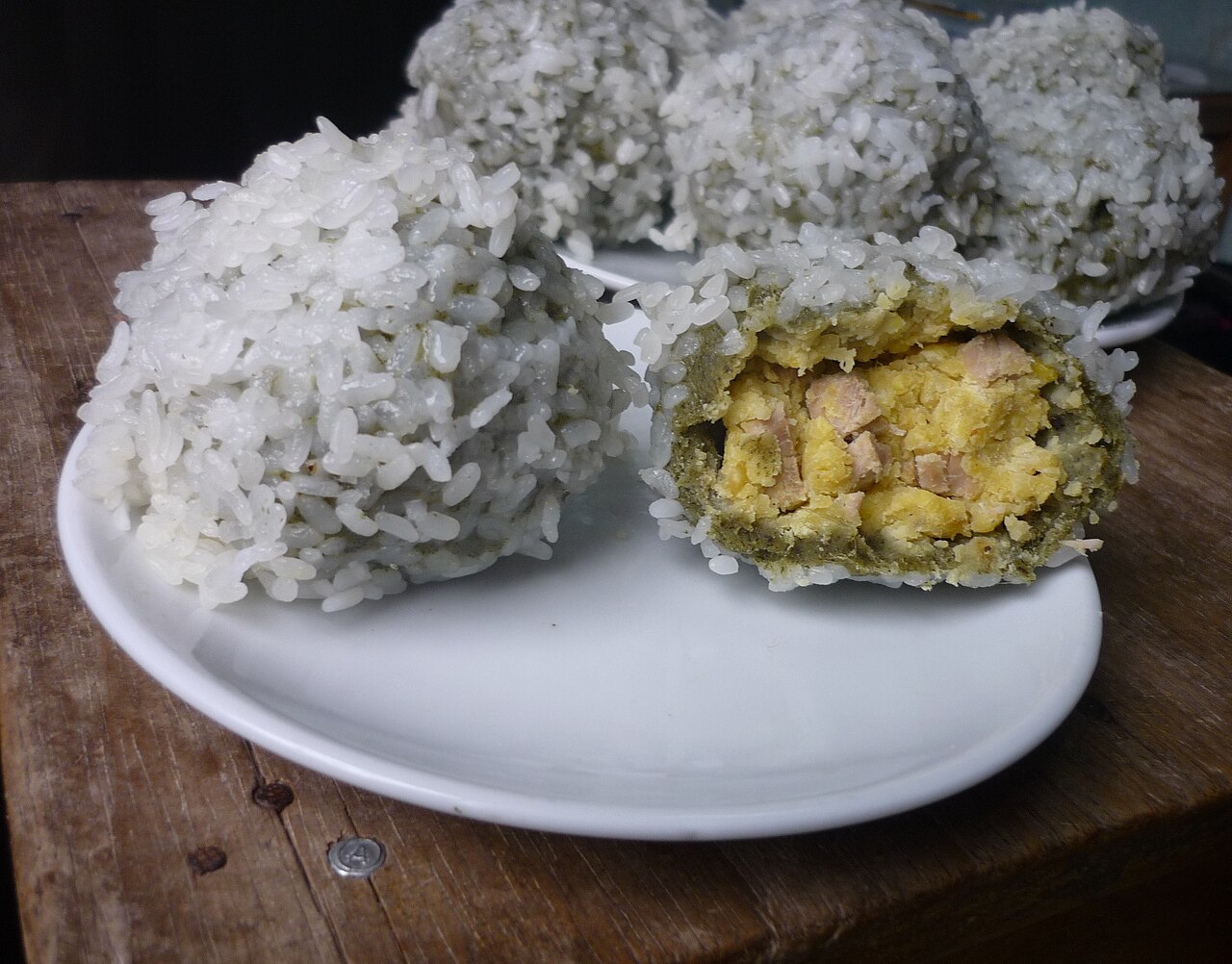
The steamer lid comes off in Diềm Village, and glossy dark-green rice cakes rise in steam -- this village wears two identities: one as the home of Vua Bà Temple, the spiritual origin point of Quan họ folk singing, and the other as the generations-old home of this cudweed rice cake.
Cross-confirmed by VnExpress and the Vietnam News Agency's Tin Tức outlet as a Diềm Village rice cake
VnExpress and Tin Tức (baotintuc.vn, under the state-run Vietnam News Agency) cross-confirm this dish. It's made by wrapping sticky rice around cudweed and steaming it, filled with mung bean and pork fat, coming out a glossy dark green once cooked. It's explicitly located in Hòa Long ward, Bắc Ninh City, in Viêm Xá village (also known as Diềm Village), and legend traces its origin to the era of Vua Bà.
Honest clarification: Quan họ itself is a musical heritage, not counted as a dish
It has to be said honestly that Diềm Village (Viêm Xá) is the only one among the "49 ancient Quan họ villages" with a founding temple (Vua Bà Temple), and Quan họ folk singing was recognized by UNESCO as an Intangible Cultural Heritage of Humanity in 2009. This makes for a strong cultural narrative hook worth using -- the same village holding both the Quan họ founding temple on one side and a century-old sticky rice cake on the other. But it must be clearly stated that Quan họ itself is a musical heritage, not a dish, and this entry doesn't break it down into any dish entry -- it's recorded here only as background cultural context. This rice cake itself is included on the strength of its own independently sourced two-outlet confirmation, not riding on Quan họ's fame. This dish has no cross-boundary issue -- Diềm Village lies within Bắc Ninh City's own Hòa Long ward.
How to Eat It Like a Local
- The making community and festival markets of Diềm Village are the easiest place to find a freshly steamed version.
- The traditional way to eat it is on its own while hot, taking in cudweed's distinctive herbal aroma.
- Visiting during a festival period lets you also learn about the Quan họ founding temple's cultural background.
An Honest Look at This Rice Cake's Origins
- Quan họ folk singing is a musical heritage; this entry doesn't break it down into a dish entry, using it only as background narrative.
- This rice cake is included on the strength of its own independently sourced confirmation, not riding on Quan họ's fame.
- Diềm Village lies within Bắc Ninh City's own Hòa Long ward, with no cross-boundary origin dispute.
Bite into the glossy dark-green rice cake and cudweed's aroma mingles with mung bean's sweetness -- this village left its musical faith to the founding temple, and left its taste memory to these steamers full of rice cakes.