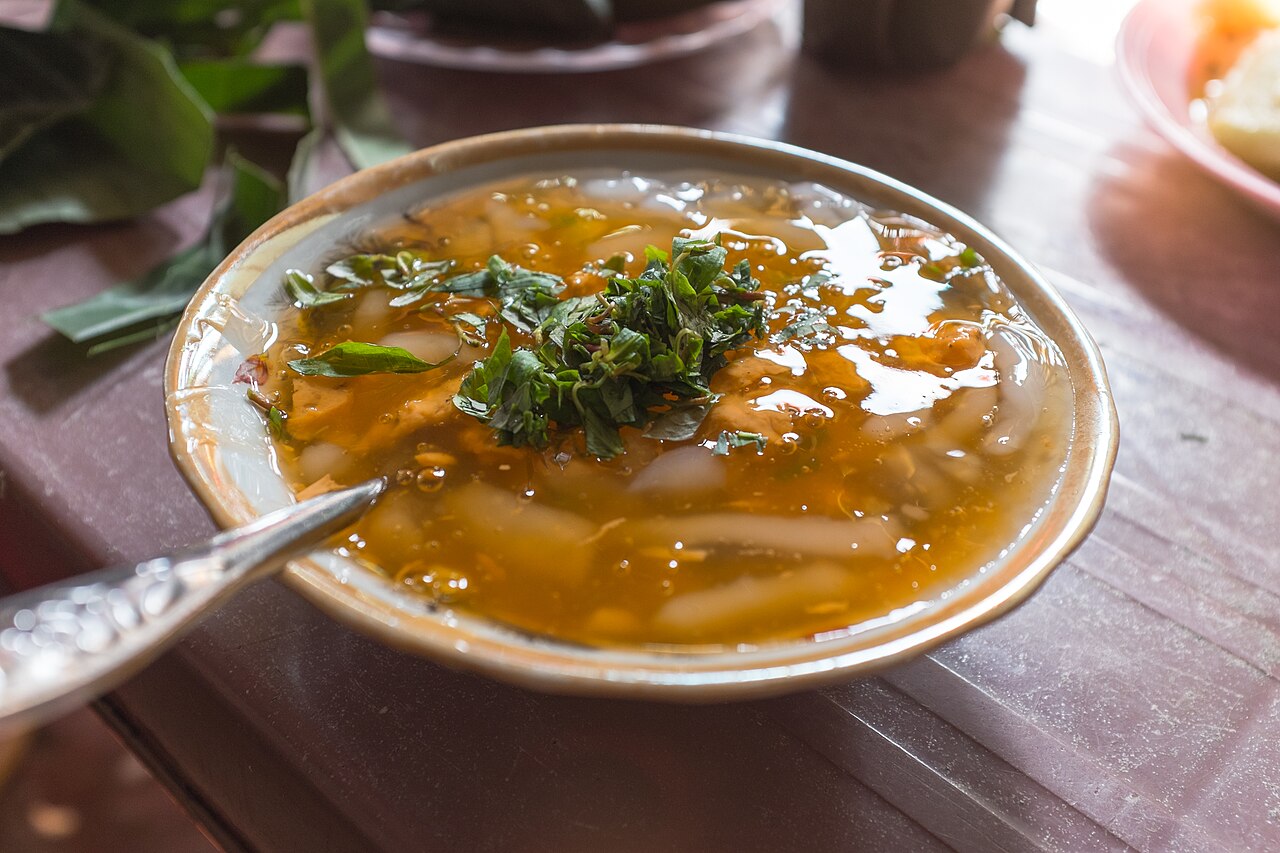
At the O Thu stall at No. 374 Chi Lăng Street, orange crab roe and pink shrimp paste float through a thick broth, with fat, chewy bánh canh noodles hovering just beneath the surface. A ladle poured over the bowl sends up an immediate burst of aroma. This soup noodle is far thicker and stickier than typical rice noodle soups, with the sweetness of crab and shrimp fully dissolved into the broth - a hearty, filling bowl in the eyes of Hue locals.
A Century-Old Craft from Nam Phổ Village
Mainstream Vietnamese travel outlets like VinWonders and Tourhue have long listed bánh canh Nam Phổ as a representative Hue soup noodle, and its birthplace, Nam Phổ village (làng Nam Phổ), is clearly documented in local records, with the craft traceable back to the 19th century. The village's method emphasizes freshly simmered crab roe and shrimp paste, with the thickness of the broth being the dish's core technique.
Honest Disclosure: The Birthplace Village and the City-Center Stall Are Two Different Places
Nam Phổ village itself is located in Phú Thượng ward, about 10 kilometers from Hue's city center, and was only incorporated into the city's administrative boundaries when Hue expanded its jurisdiction in 2021. Given map convenience and ease of access for visitors, this entry anchors on the long-running, well-regarded O Thu stall on Chi Lăng Street in the city center - but it must be said honestly: the birthplace village (Nam Phổ) and the popular city-center stall (Chi Lăng Street) are two different locations. Anyone wanting to trace the craft to its original source should consider setting aside separate time to visit Nam Phổ village itself.
Eating on Chi Lăng Street
- O Thu is at No. 374 Chi Lăng Street, a long-established, well-regarded choice in the city center.
- The broth is thick and the portion is generous - one bowl is usually enough on its own, no need for extra sides.
- To order in Vietnamese, try 'Cho tôi một tô bánh canh Nam Phổ' (one bowl of crab and shrimp thick noodle soup, please).
The Village and the City Are Two Different Things
- Nam Phổ village is the documented birthplace, but it's about 10 kilometers from the city center and was only incorporated into Hue's jurisdiction in 2021.
- The city-center stalls on Chi Lăng Street developed later as popular spots - convenient, but not the birthplace itself.
- To fully understand this dish, it's worth keeping the birthplace village and the city-center stalls as two separate things rather than conflating them.
A bowl of thick soup noodles carries a craft handed down from a village in the 19th century - and also the story of how it traveled into the city, ten kilometers from its original home.